
More-than-Human: Relationality of Plasticulture Urbanism in Antalya, Türkiye PhD
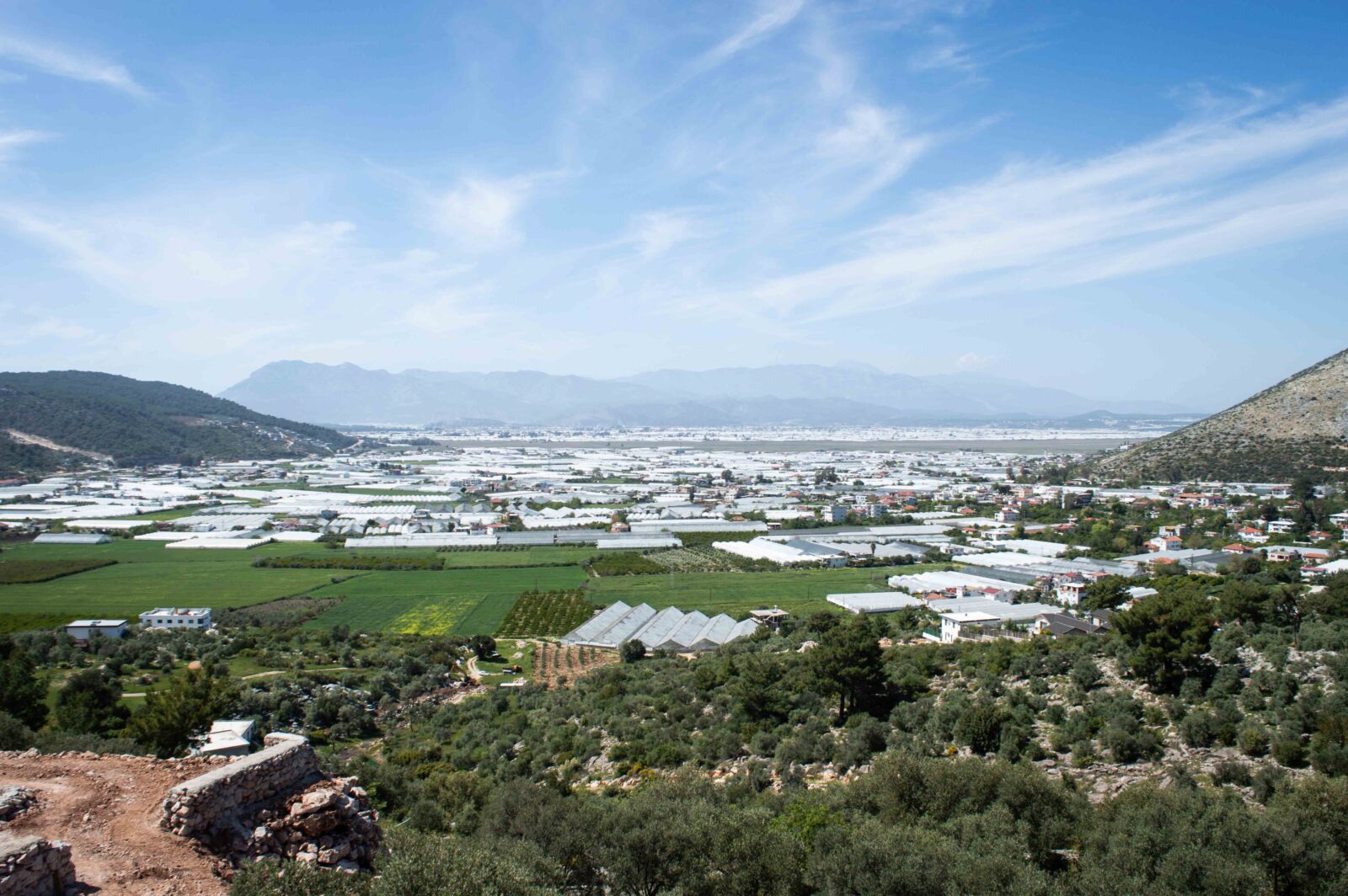
Photograph of plasticulture territories taken during the fieldwork in Antalya, April 2025
Ozge Suvari [PhD year 3]
Supervisors: Lindsay Bremner & Krystallia Kamvasinou
Plasti-agri-culture, the use of plastic-covered systems such as greenhouses, tunnels and mulches, has rapidly expanded worldwide, creating intensive agricultural landscapes that extend cultivation beyond seasonal limits. Although these landscapes help meet rising food demands, they also intensify environmental problems through soil and water contamination, the accumulation of agricultural waste, and escalating pressure on groundwater. To understand these dynamics, my research approaches plasticulture as a form of agrarian urbanism shaped simultaneously by local climate, soil and topography and by planetary networks of transport, agrochemicals and labour.
Drawing on mapping and multi-sited and multispecies ethnography, I focus on Antalya, Türkiye, where plasticulture urbanism is densely concentrated, and follow plants from the greenhouses where they are cultivated to the wholesale markets where they are sold.
I argue that plasticulture urbanism cannot be understood through remote sensing and aerial photography alone; it is also a material, lived space shaped by diverse human and more-than-human actors.
KEY WORDS: agrarian urbanism; multispecies ethnography; greenhouse farming; plant agency