
Barcelona Pavilion: The Original 1986 Reconstruction and the Reproduction of Authentic User Experiences Welcome to MORE 2026
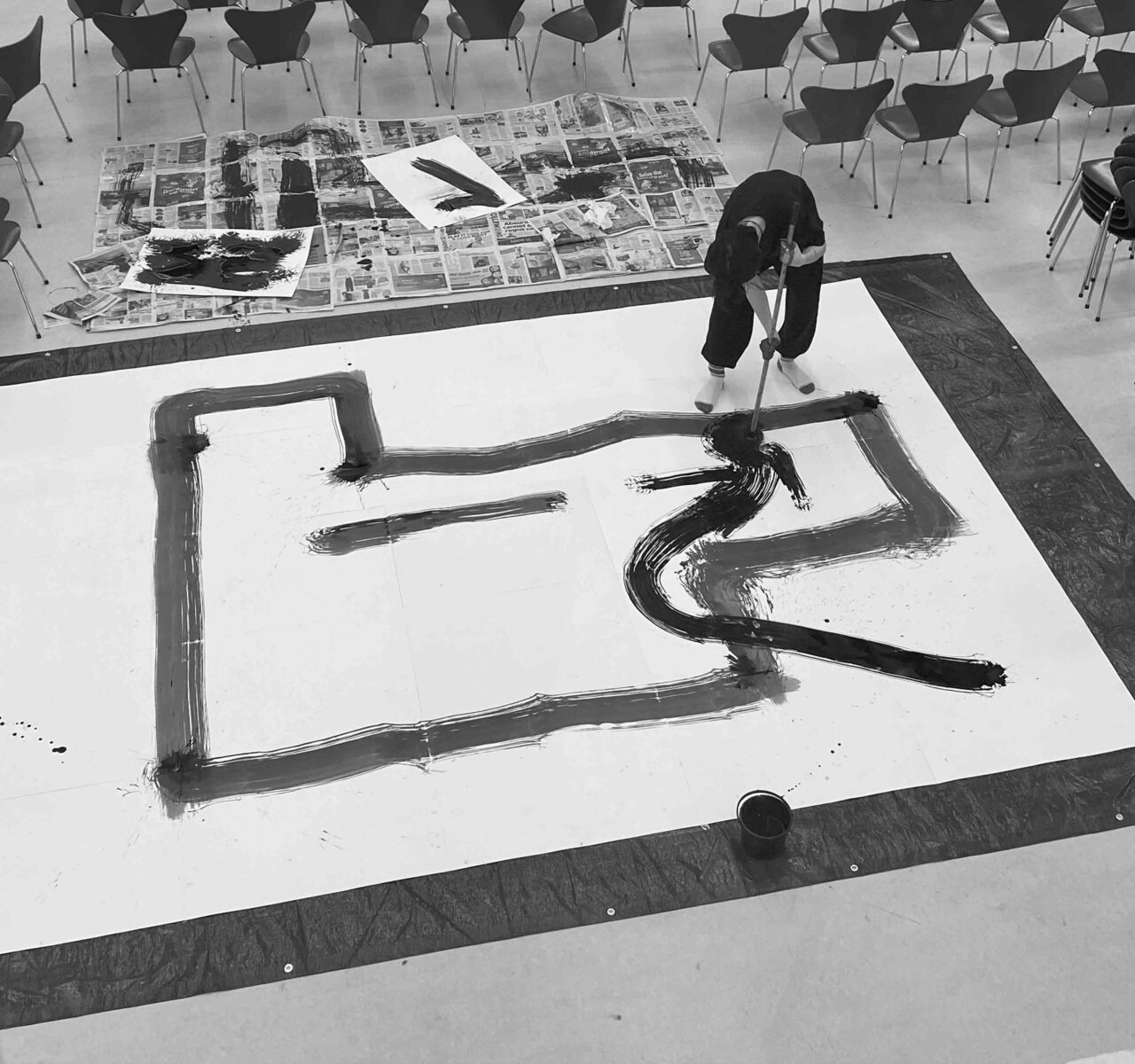
Post-visit, this large-scale piece of calligraphy is devised as a response to, and expression of, the 1986 reconstructed Barcelona Pavilion [© Ken McParland
Lead Researcher: Constance Lau
Publication details: ‘The Original Reconstructed 1986 Barcelona Pavilion and the Reproduction of Authentic User Experiences’, in Interiors Journal (15, 2-3), (2025). pp 220-242
The chronicles of the Barcelona Pavilion begin with the premise that there are three pavilions to date. Mies van der Rohe’s original International Exposition 1929-30 structure, dismantled after only six months; the one publicised through his manipulated photographs; and the 1986 physical reconstruction, based on archival material. Each pavilion privileged different objectives with different consequences, however the reconstruction enabled physical occupancy crucially establishing that there is a fourth Pavilion: one that accumulates through the ever-changing body of experience generated by those who occupy the reconstruction.
Using the theories of Walter Benjamin, Jonathan Hill and Roland Barthes, expounds how each pavilion is not a simulacrum of earlier iterations, and how authenticity is not exclusive to any version.
Rather, each pavilion is a dialectical creation from user-led, asynchronous processes of reproduction, in different media and modes, which simultaneously confront, place and integrate material and chronological shifts, initiating visual and experiential interpretations of the past, present and future readings of all the Pavilions.
The large-scale calligraphy piece by Ken McParland, created in response to his visit to the 1986 Pavilion, provides a further interpretation of this spatial and experiential dialogue between user and subject. Here, impermanence is valued not as loss but as clarity, care and presence. The understanding and meanings shift as they are recreated at every stage of this personalised articulation of yet another version of the Barcelona Pavilion.
KEY WORDS: dialectics; authorship; asynchronous; creative user; Barcelona pavilion