
Monitoring Access Control Barrier Removal on Traffic-Free Walking, Wheeling and Cycling Routes Welcome to MORE 2026
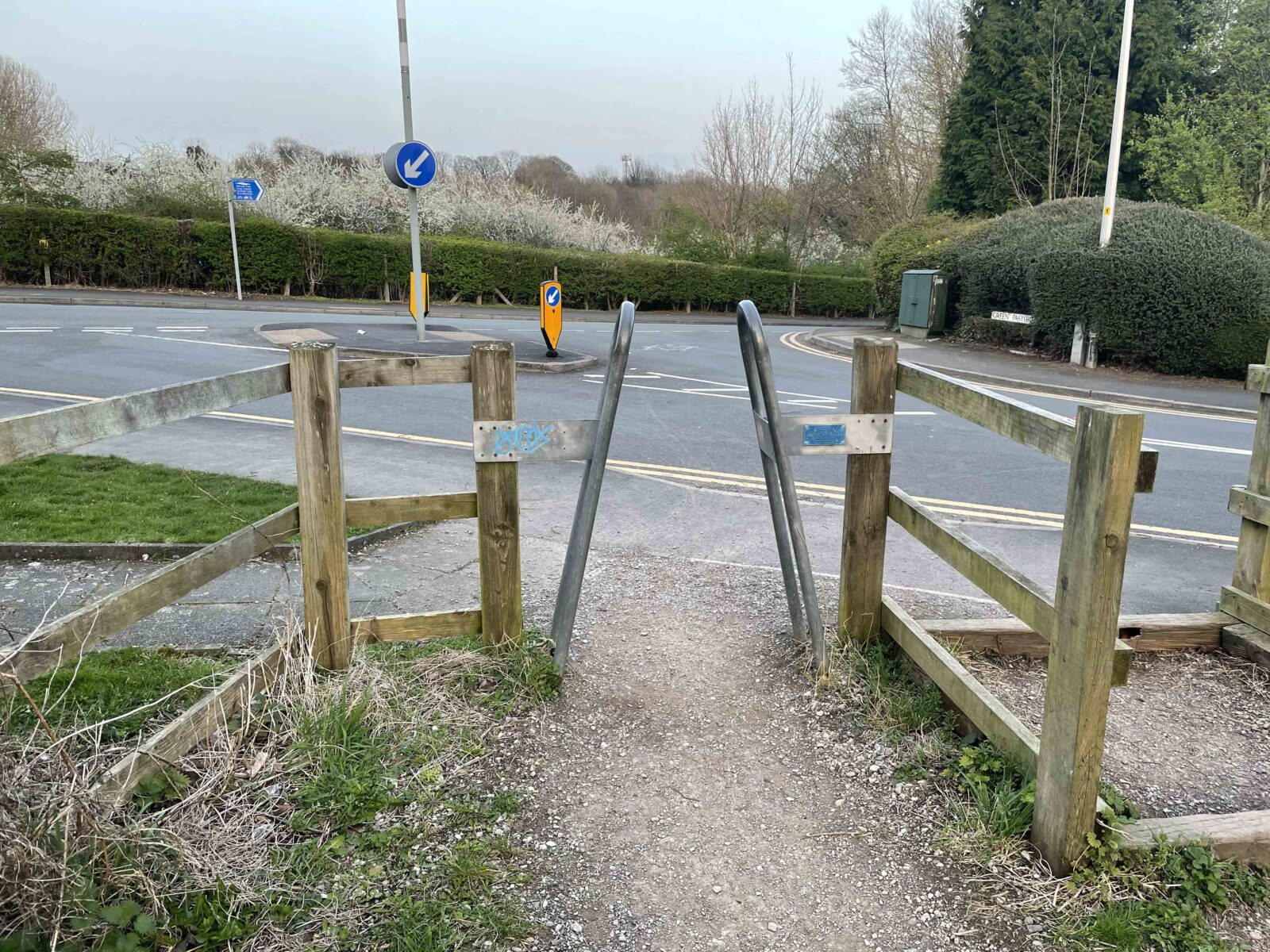
Example of an access control barrier (A frame)
Lead Researcher: Harrie Larrington-Spencer
Other Researchers: Rachel Aldred & Faye Shortland
Funding: Motability foundation, £188,000
Access control barriers are commonly installed on traffic-free walking, wheeling and cycling routes. The logic behind these barriers is that legitimate users, such as walkers or cyclists on a two wheeled bicycle, can get through whilst illegitimate users, such as those on motorcycles, cannot. However, the design of these barriers means they also excludes disabled people who use mobility aids like wheelchairs, mobility scooters and adapted cycles.
This research is using machine learning sensors to understand what effects are experienced on traffic-free walking and cycling routes when access controls are removed in terms of levels of antisocial behaviour and legitimate use. Additionally, go-along interviews are being conducted with disabled people to understand the impacts of the barriers and their removal upon mobility practices; and surveys are being conducted with residents to understand their experiences of barrier removal on traffic-free routes.
This research will allow local authorities to make informed and evidence-based decisions about traffic-free routes, and support disabled people’s use of the mobility aids they need to get about.
KEY WORDS: active travel; disability; traffic-free routes