
Dazzle Camouflage: Design and Devices Welcome to MORE 2026
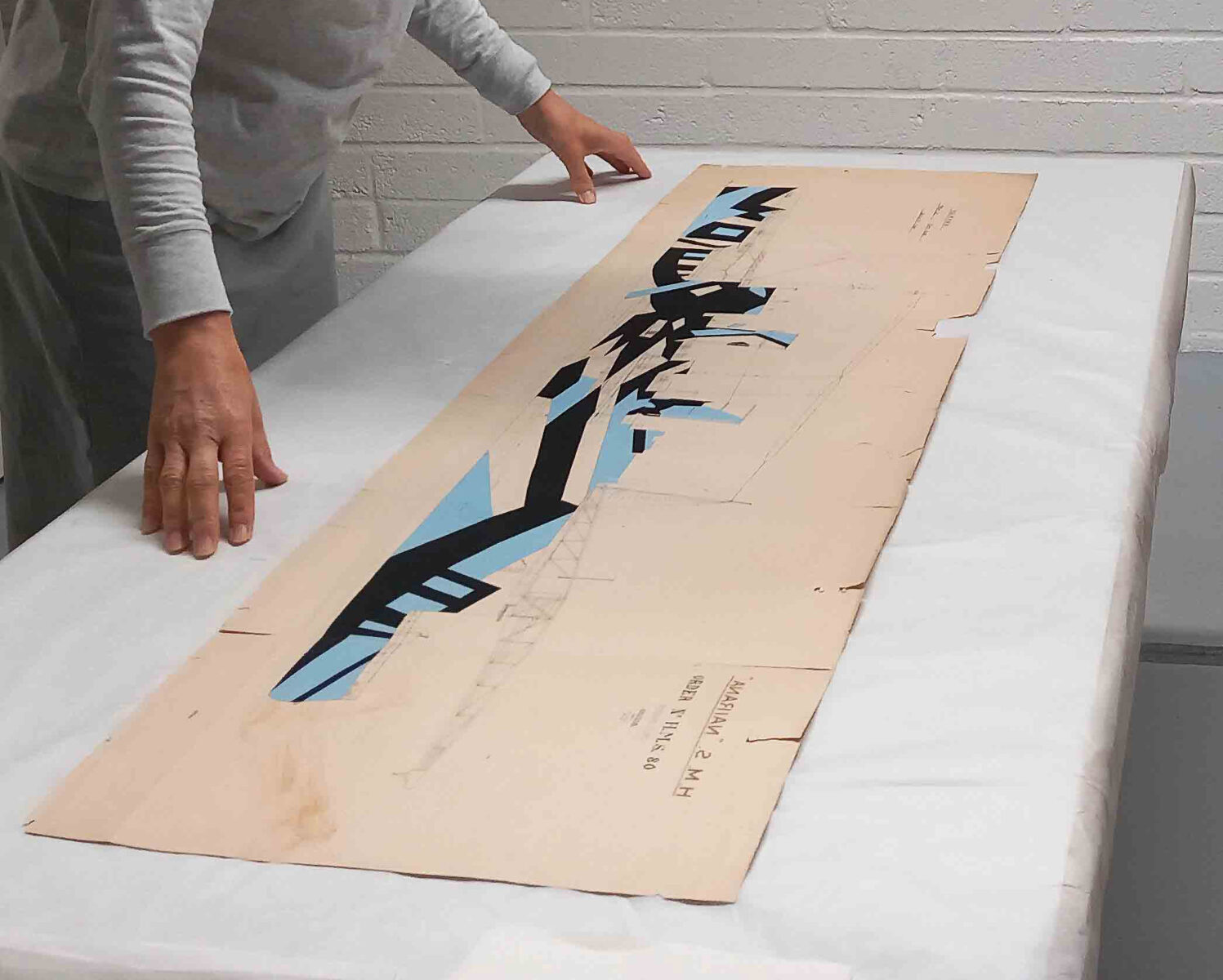
Camilla Wilkinson with port dazzle plan for HMS Nairana, with thanks to the staff of the Imperial War Museum and Duxford Paper Store
Lead Researcher: Camilla Wilkinson
Funding: DCDI seed funding for exhibition model concept
Publication Details: ‘Dazzle Camouflage Practice: Design and Devices’, AMPS Proceedings (44, 3) 2005, pp. 73-82
The aim of this project is to present Dazzle Painting, the First World War Camouflage System, as a design practice. Since 1919, parallels have been drawn between Dazzle Painting’s quasi-technical, abstract designs and the spatial concepts in modernist art and, over a century later, Dazzle Camouflage continues to attract public attention and excite imaginations.
The assumption that modernist artworks were a major influence on the inception of Dazzle Camouflage is commonly made but cannot be substantiated. This assumption discounts the concept for Dazzle Camouflage, conceived by marine artist Norman Wilkinson, which was derived from his experience of war at sea.
This creates an awkward disjuncture in an otherwise engaging narrative, where avant-garde meets establishment in saving of ships, resources and lives.
This research argues that the experience and observation, through drawing, of the abstract spatial qualities of modernist warfare had a stronger influence on the origin and development of Dazzle designs produced by the camoufleurs. This interpretation generates more nuanced questions about the process, intentions and development of the designs that created Dazzle Camouflage’s multi-spatial logic and esoteric qualities.
KEY WORDS: dazzle camouflage; design; maritime history; modernism