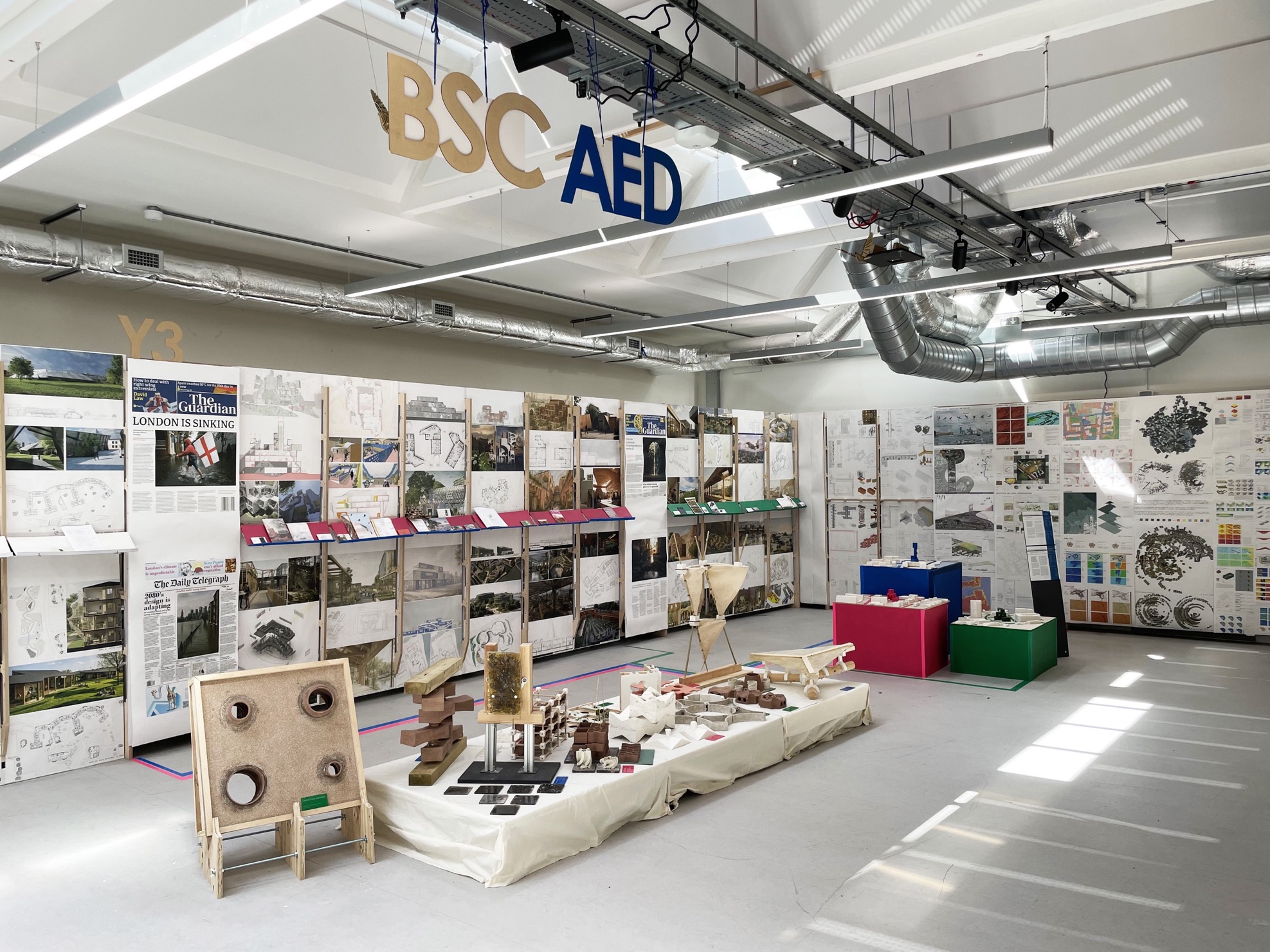
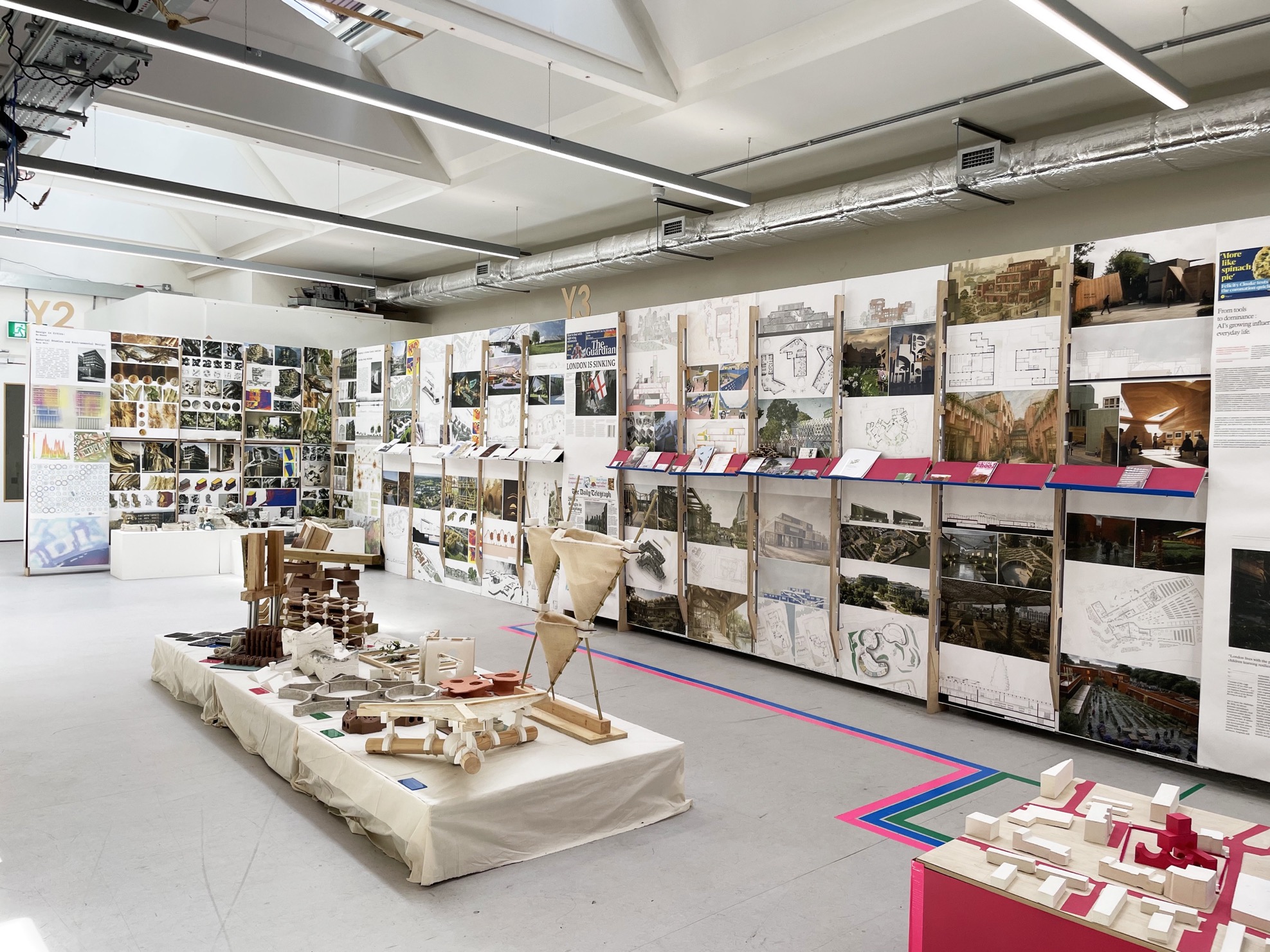
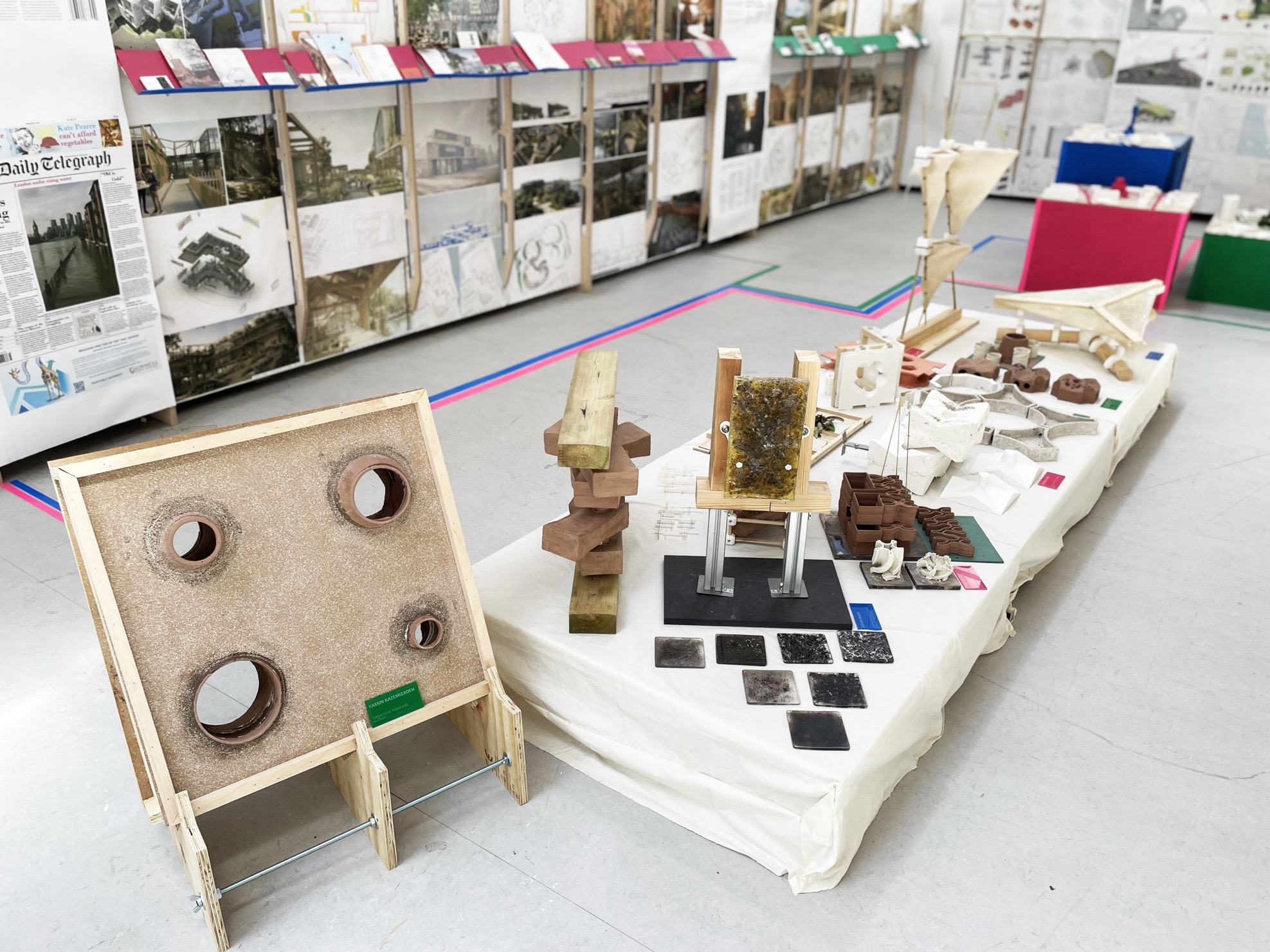
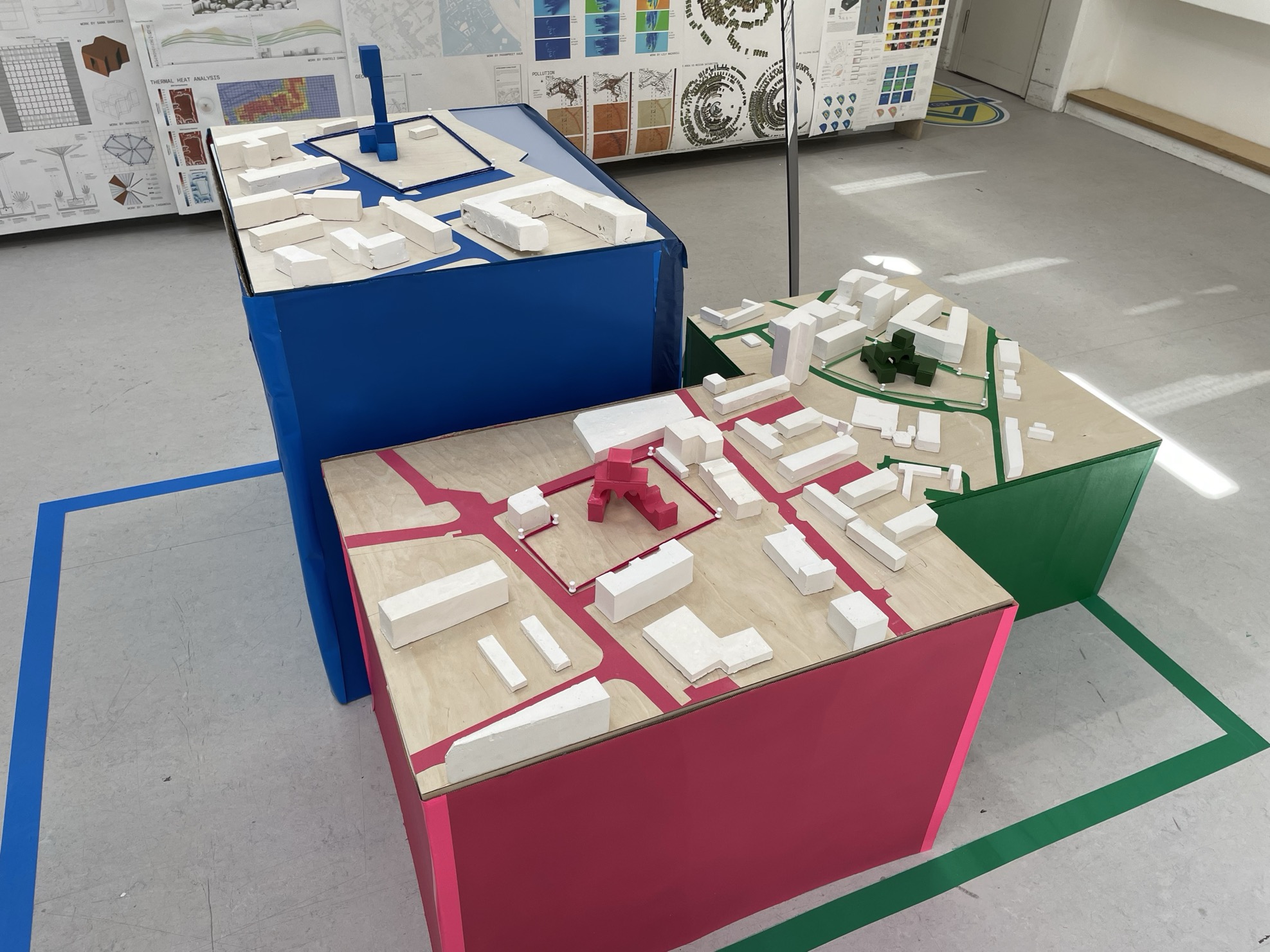
BSc Architecture & Environmental Design Introduction BSc Architecture
Course Leader: Stefania Boccaletti
Climate change stands as one of the most urgent and defining challenges of our time, reshaping not only the physical environment but also the cultural and intellectual frameworks through which architecture operates. Developed in response to the climate crisis, the BSc Architecture and Environmental Design (AED) at the University of Westminster offers an interdisciplinary education positioned at the intersection of design, ecology and technological innovation.
The programme prepares students to engage with the complexities of the built environment through an approach that is at once analytical, creative and ethically grounded. It cultivates architects who are both environmentally literate and capable of assessing and reducing the ecological impact of their work. Central to its pedagogy is a holistic approach to climate-conscious design, combining the physical ecologies of building with numeracy, computation and the broader principles of social sustainability.
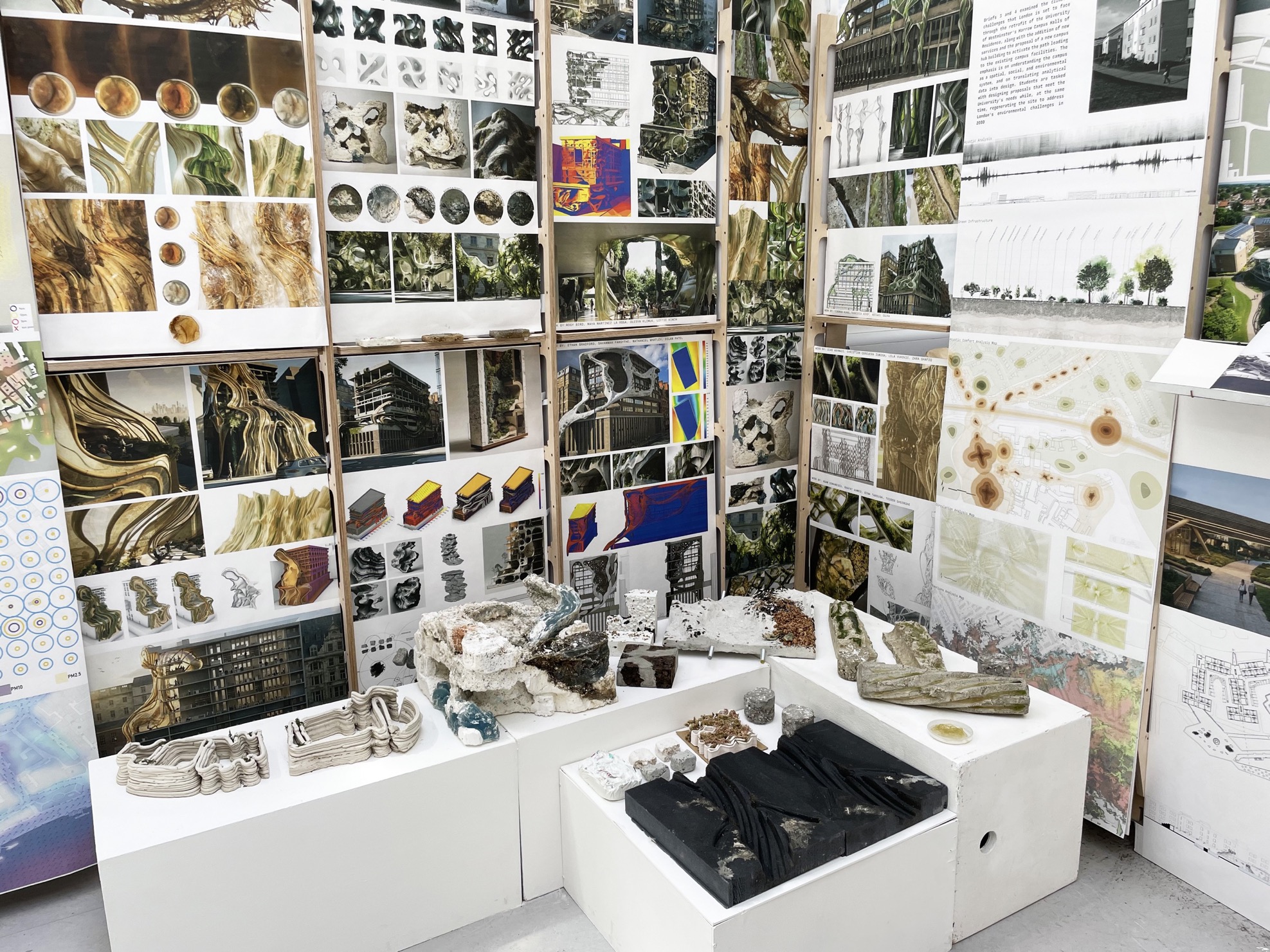
Over three years, students acquire the ability to predict, evaluate and enhance building performance through both quantitative and qualitative methods. They are introduced to design as a process extending and developing across time, engaging with responsive futures rather than fixed solutions. Through digital simulations and evidence-based methods, students explore environmental scenarios at different scales, testing design propositions that respond to the fluidity and uncertainty of a rapidly transforming world. Design, in this context, becomes both speculative and grounded in the realities of performance and adaptability.
Interdisciplinarity lies at the core of the BSc AED. By bringing the sciences and humanities together, the programme develops a shared design literacy that links environmental data, material testing, theory and creative practice. Students use digital tools not only for accuracy, but as a way to think critically, helping them model complexity while reflecting on the cultural and ethical implications of their work.
Ultimately, the BSc AED redefines the role of the architect for the age of climate urgency. Graduates emerge as advocates for a regenerative approach to design committed to resilience, innovation and environmental responsibility. By combining creativity with analytical rigour, and environmental understanding with technological expertise, the BSc AED shapes architects capable of advancing sustainable and regenerative futures, who are equipped to navigate the challenges of an evolving and uncertain world.