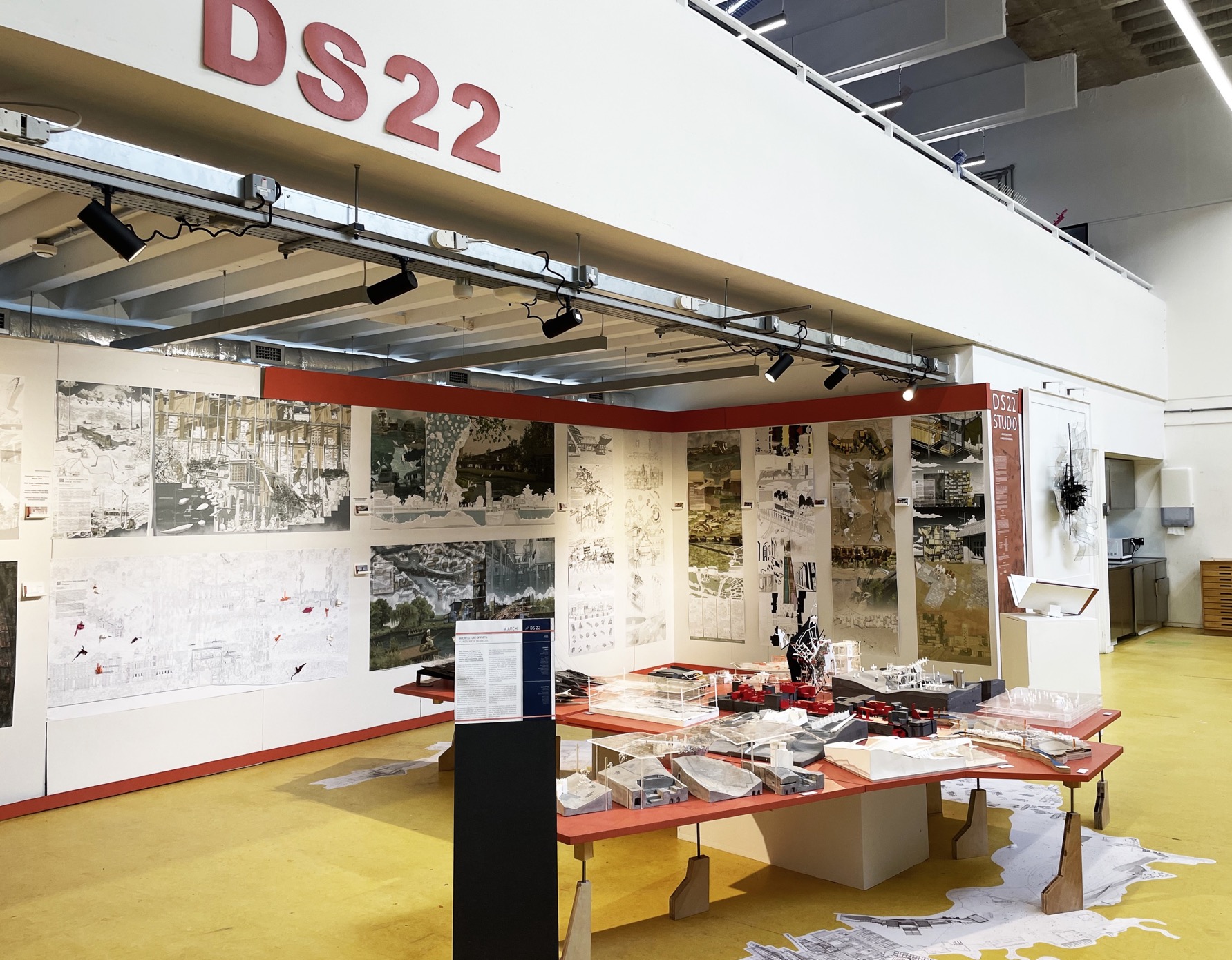
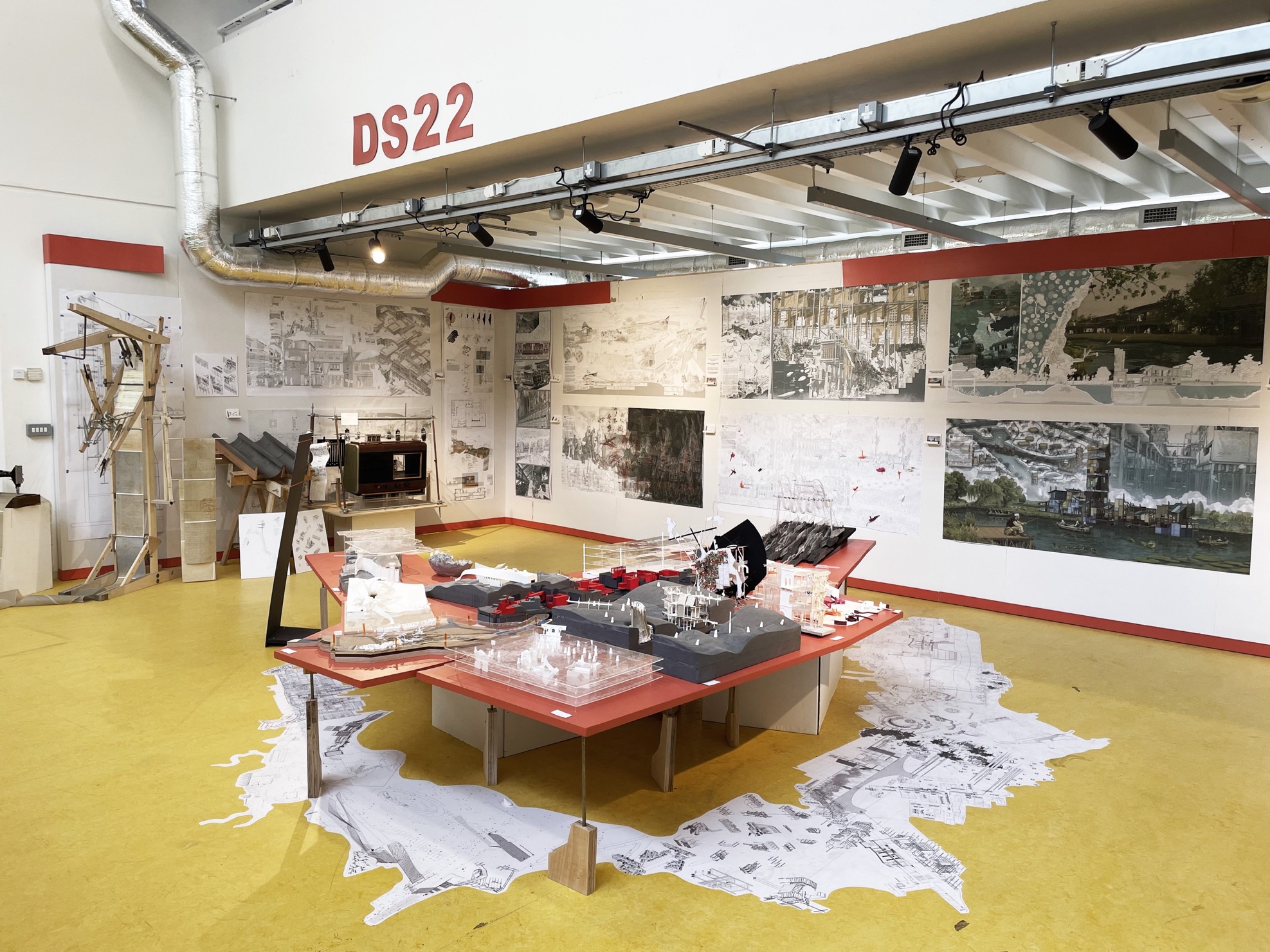
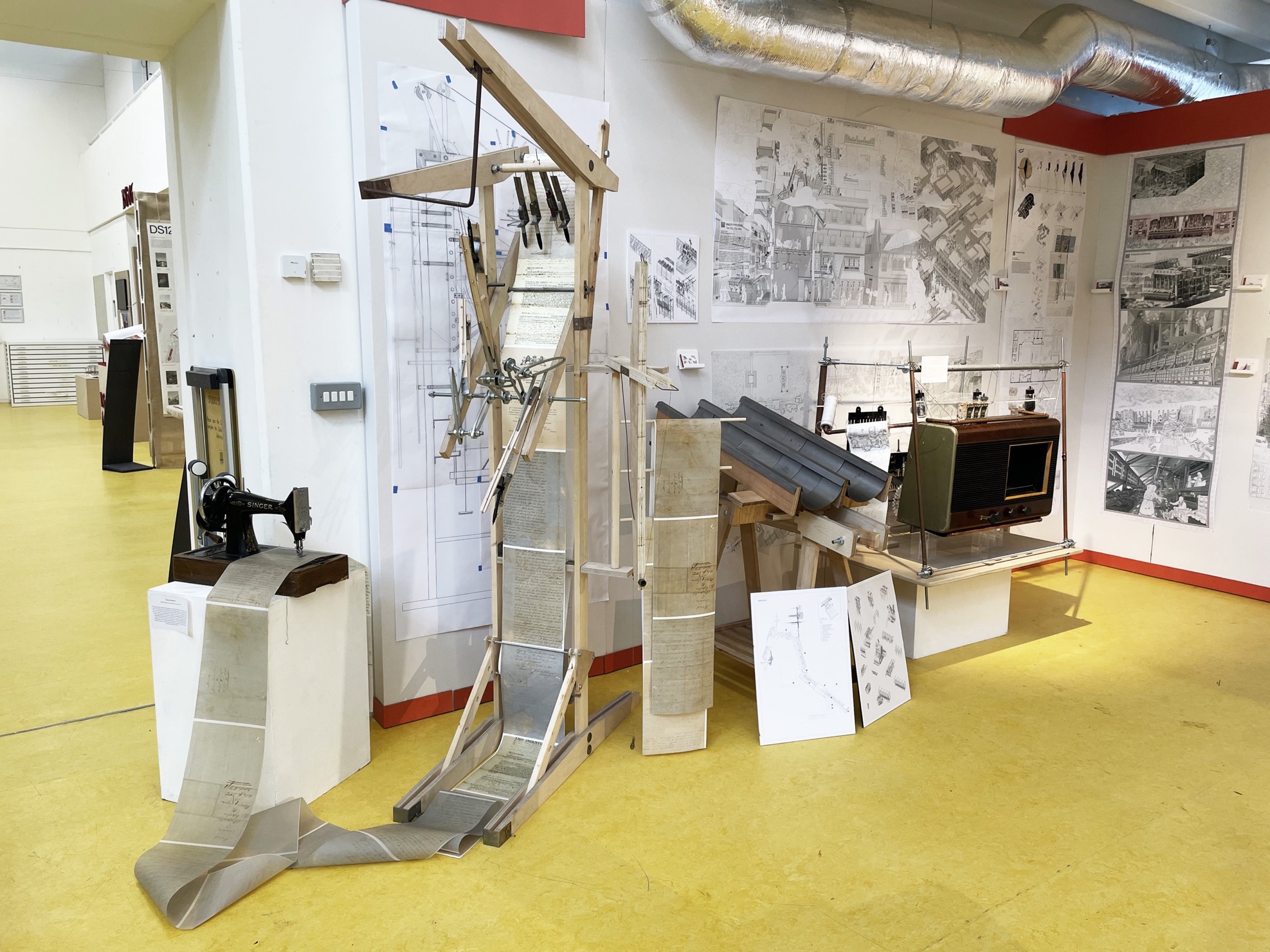
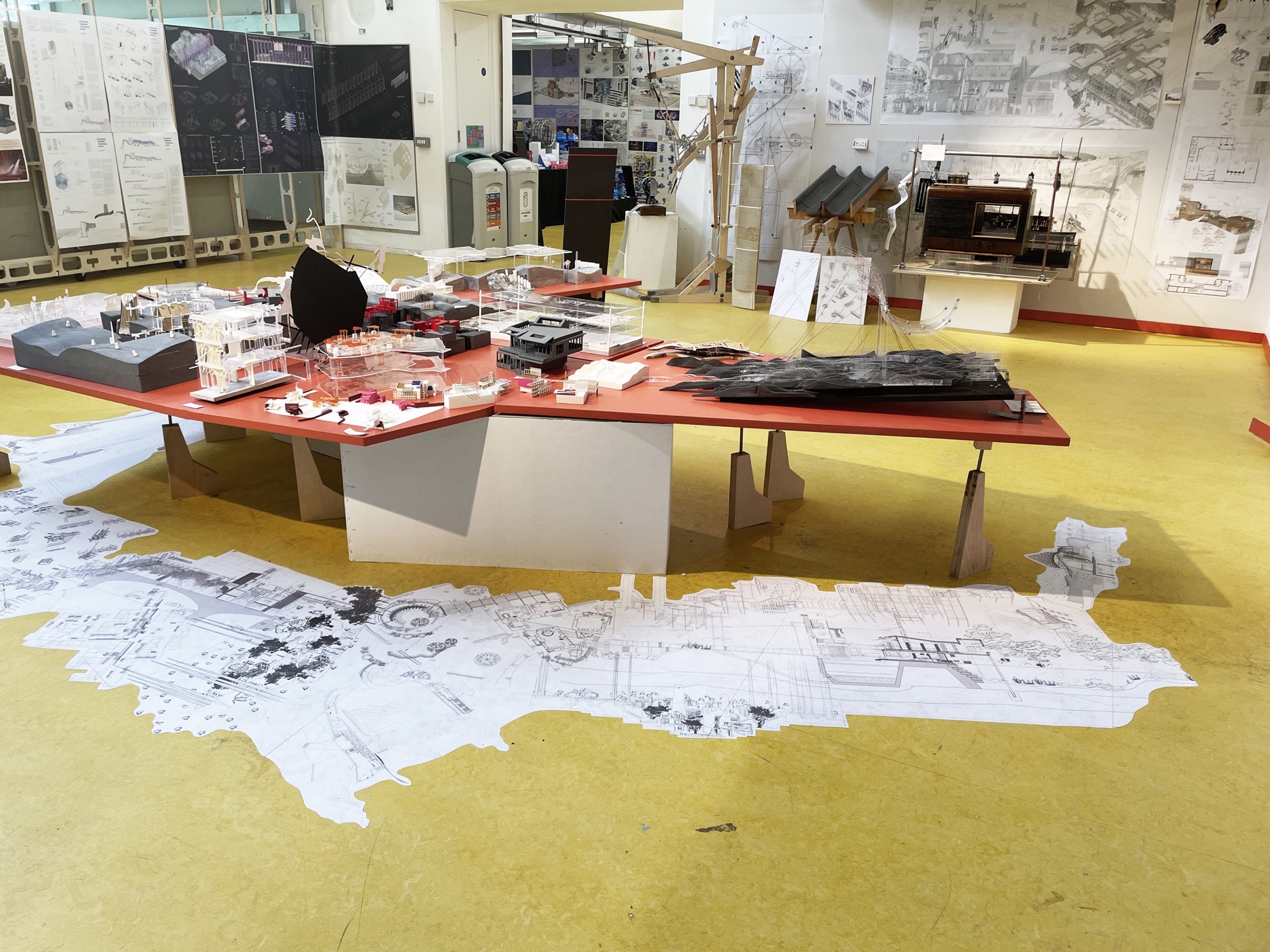
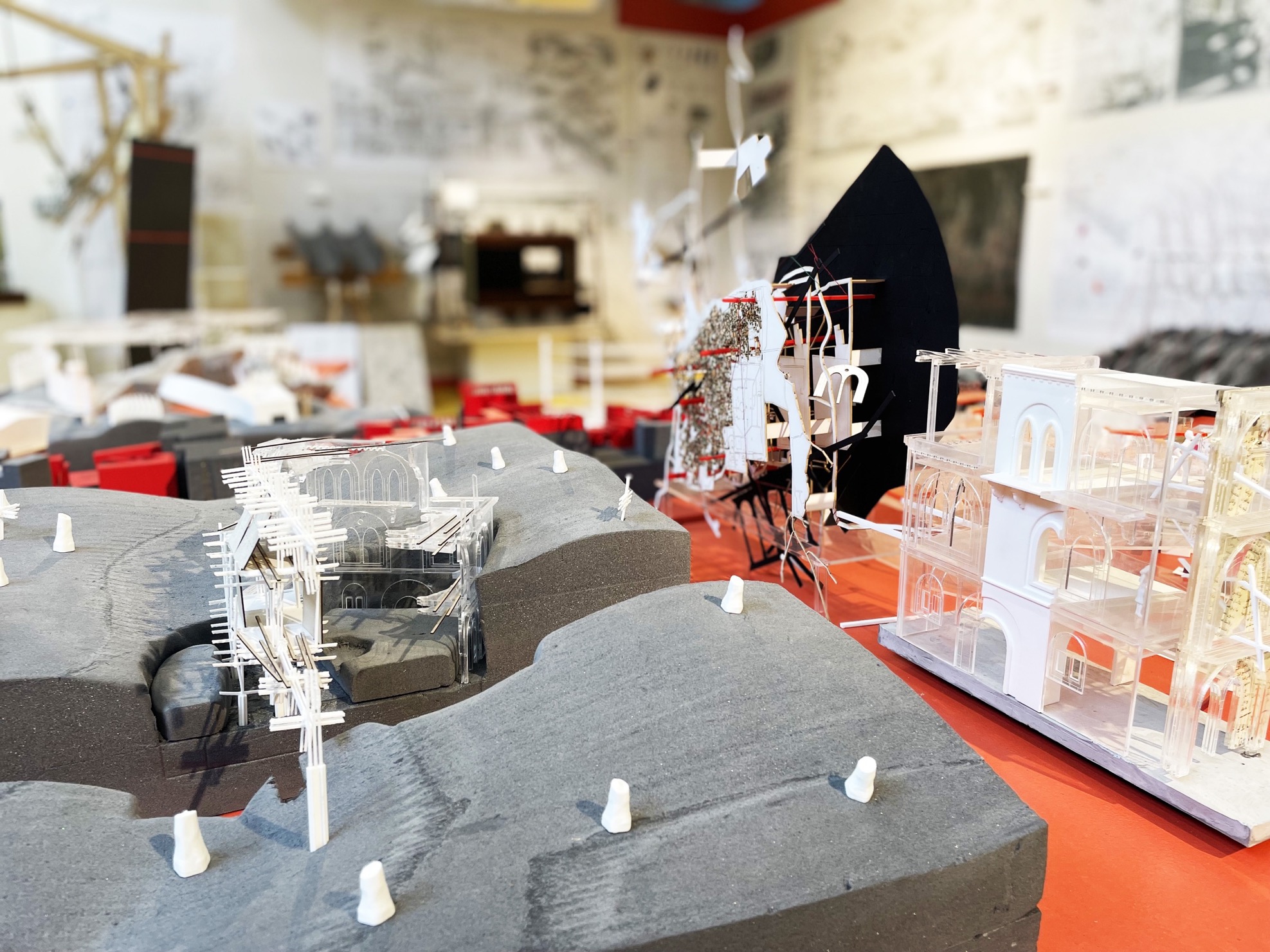
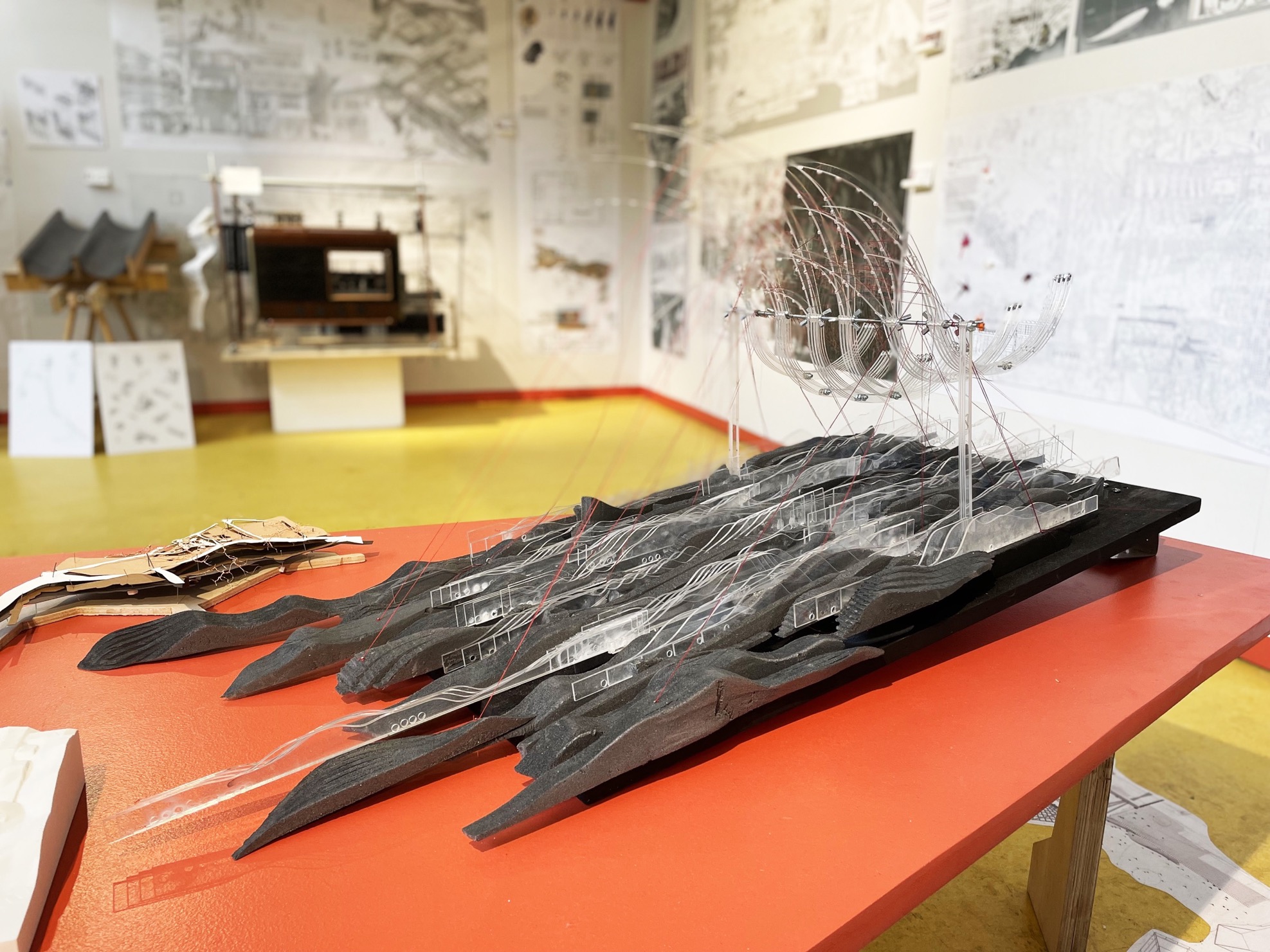
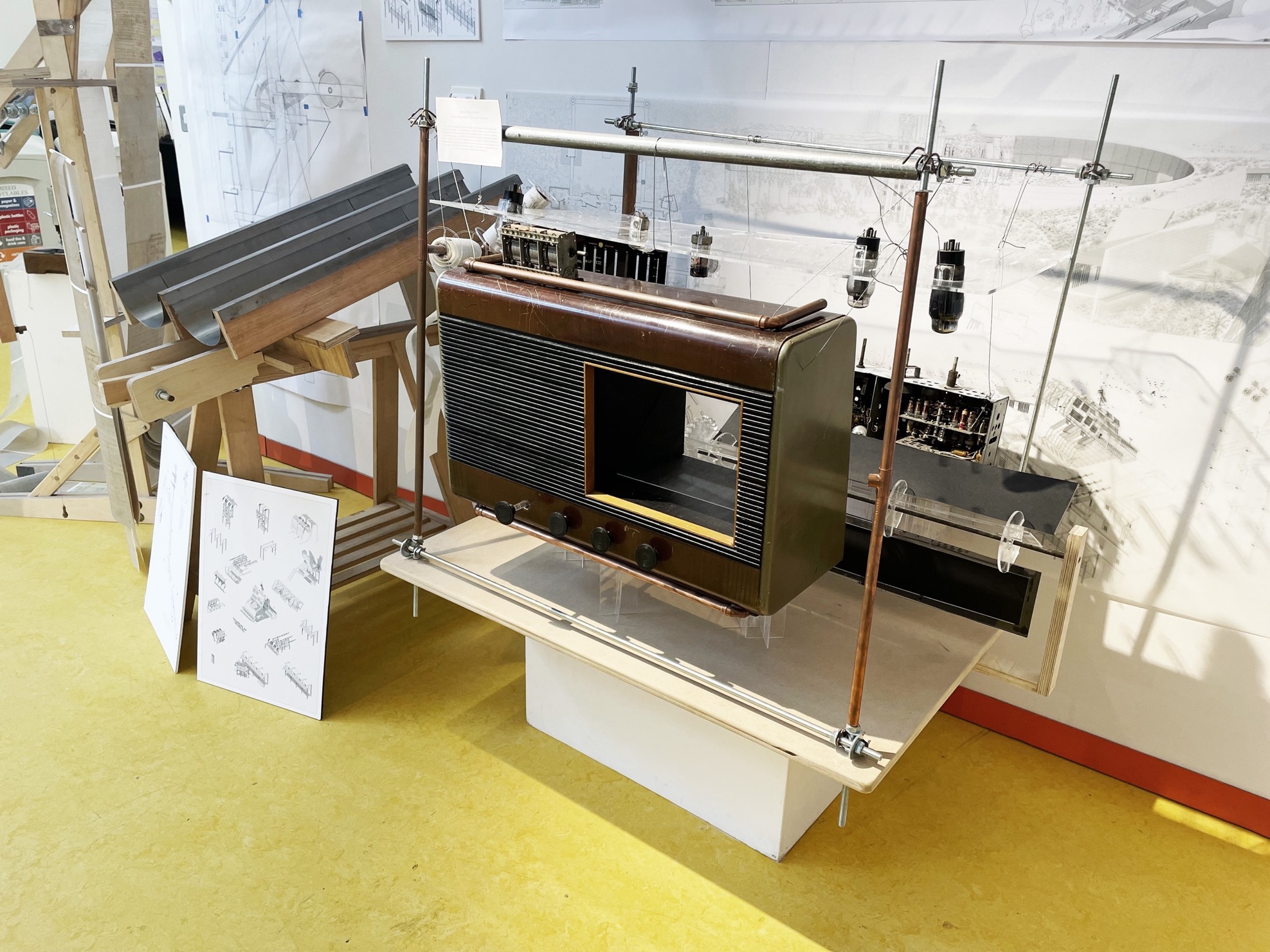
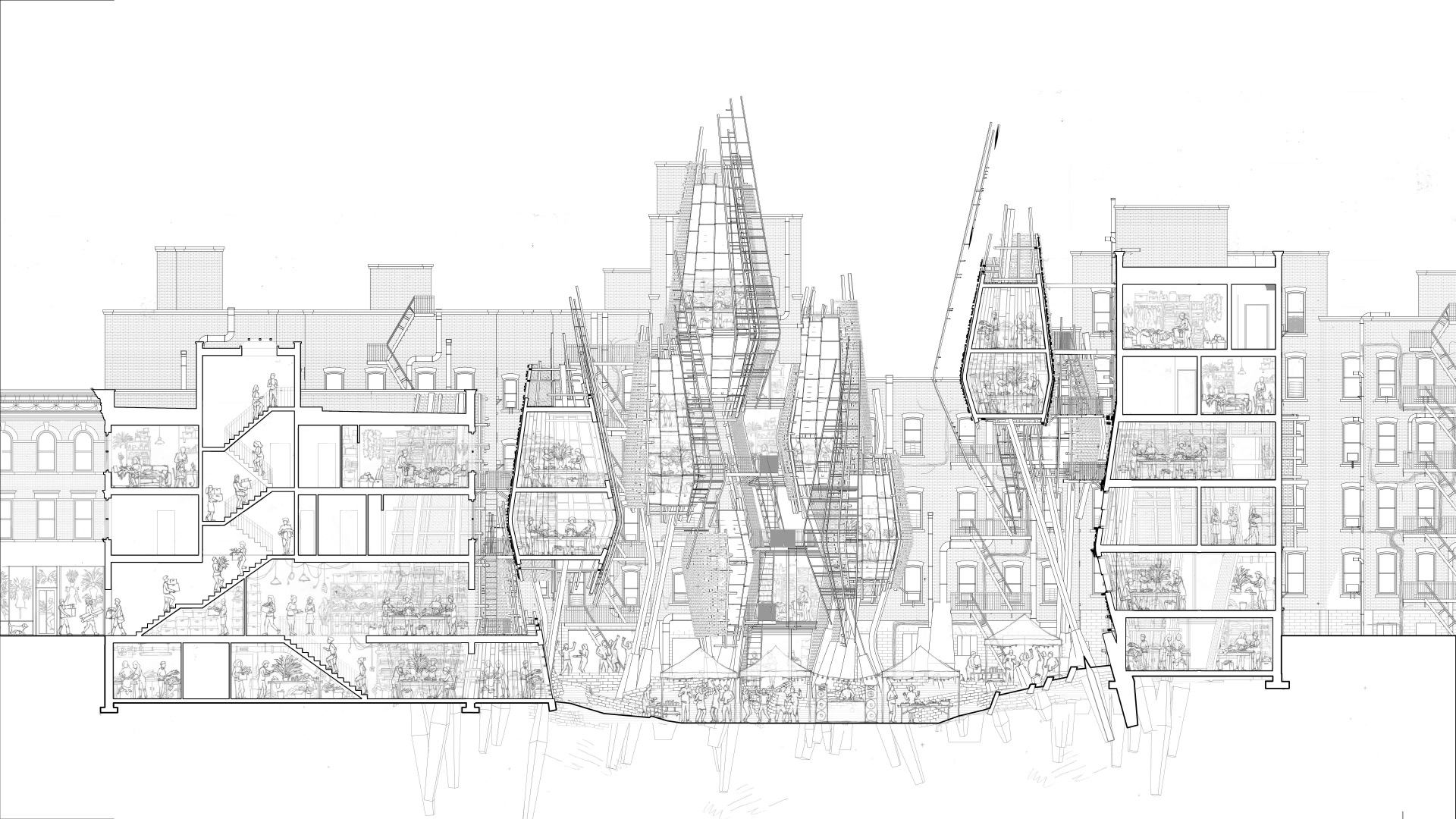
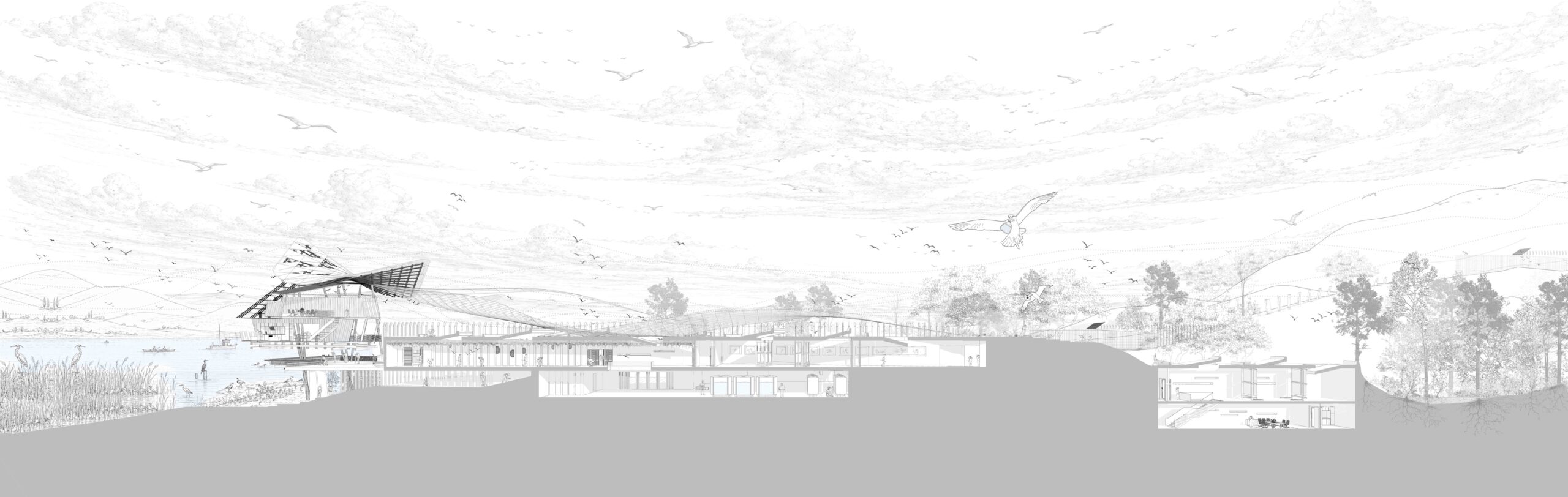
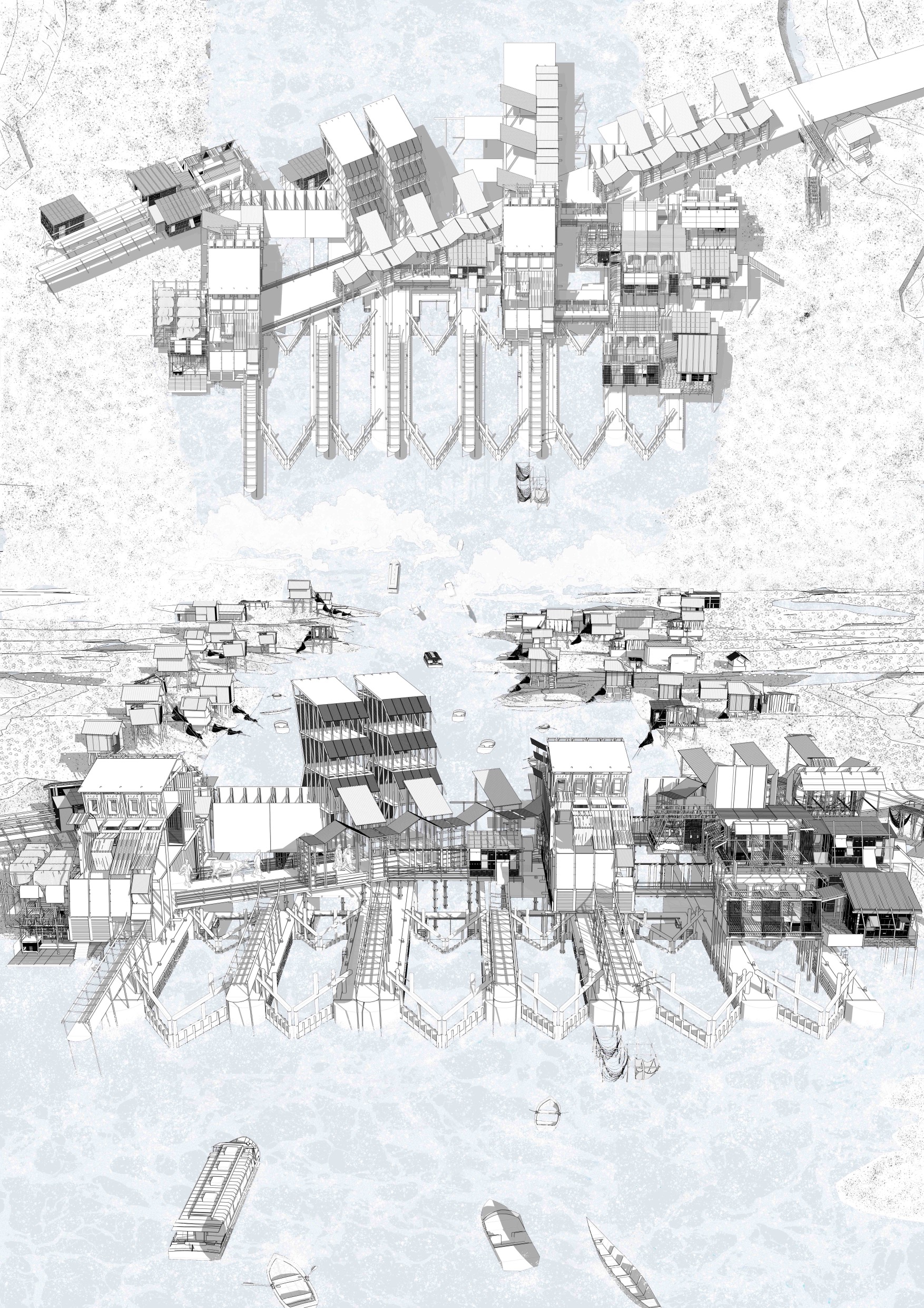
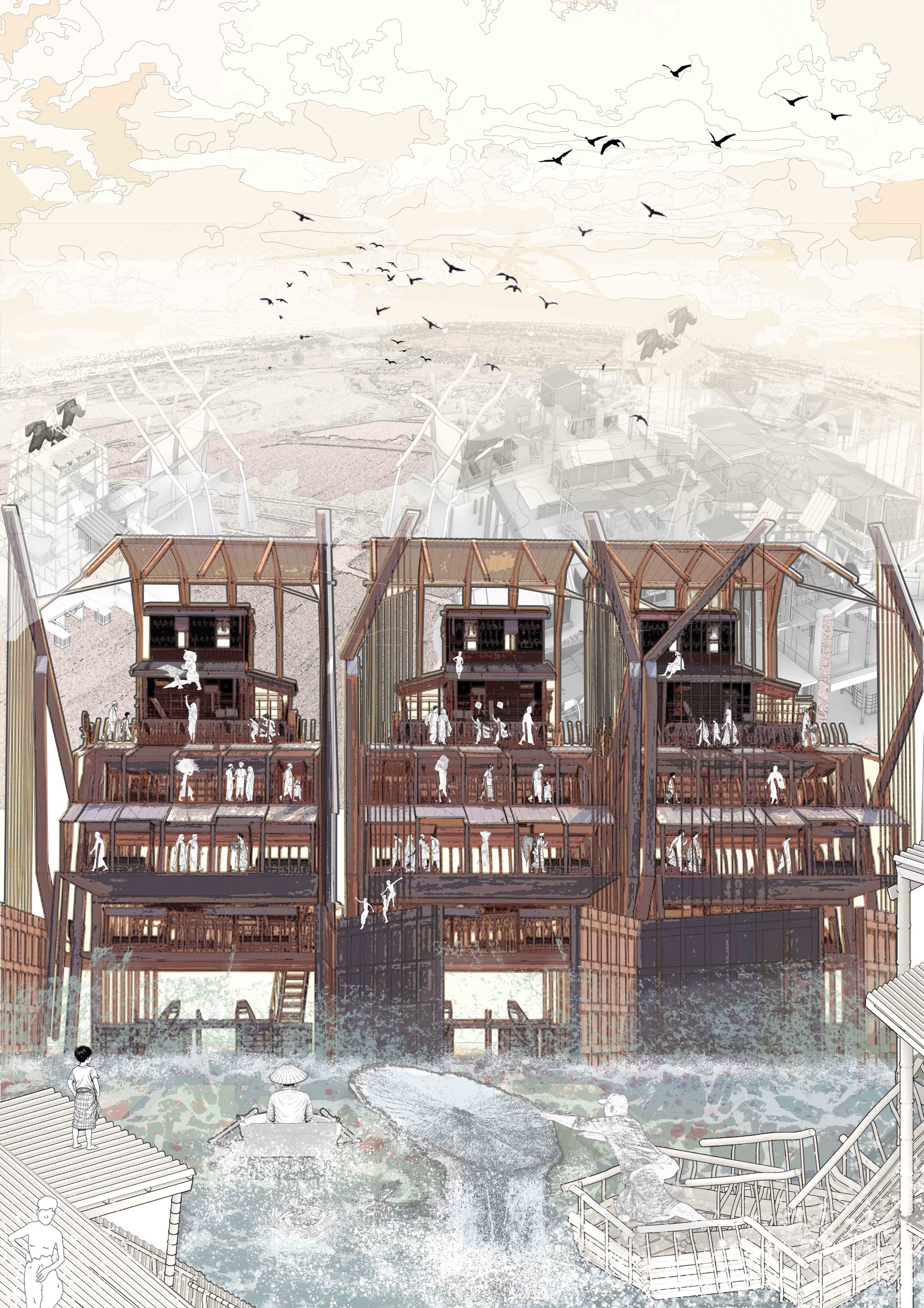
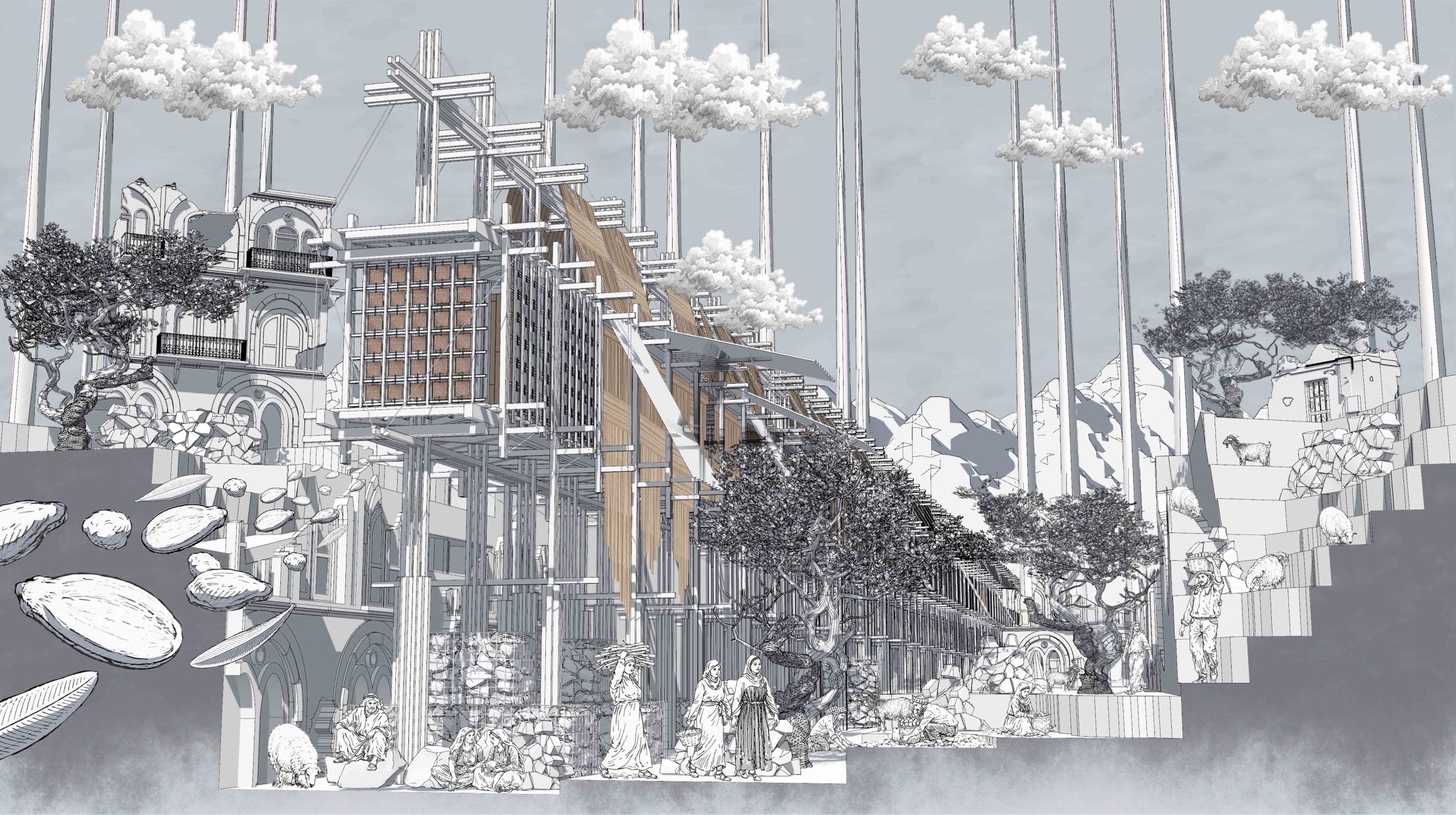
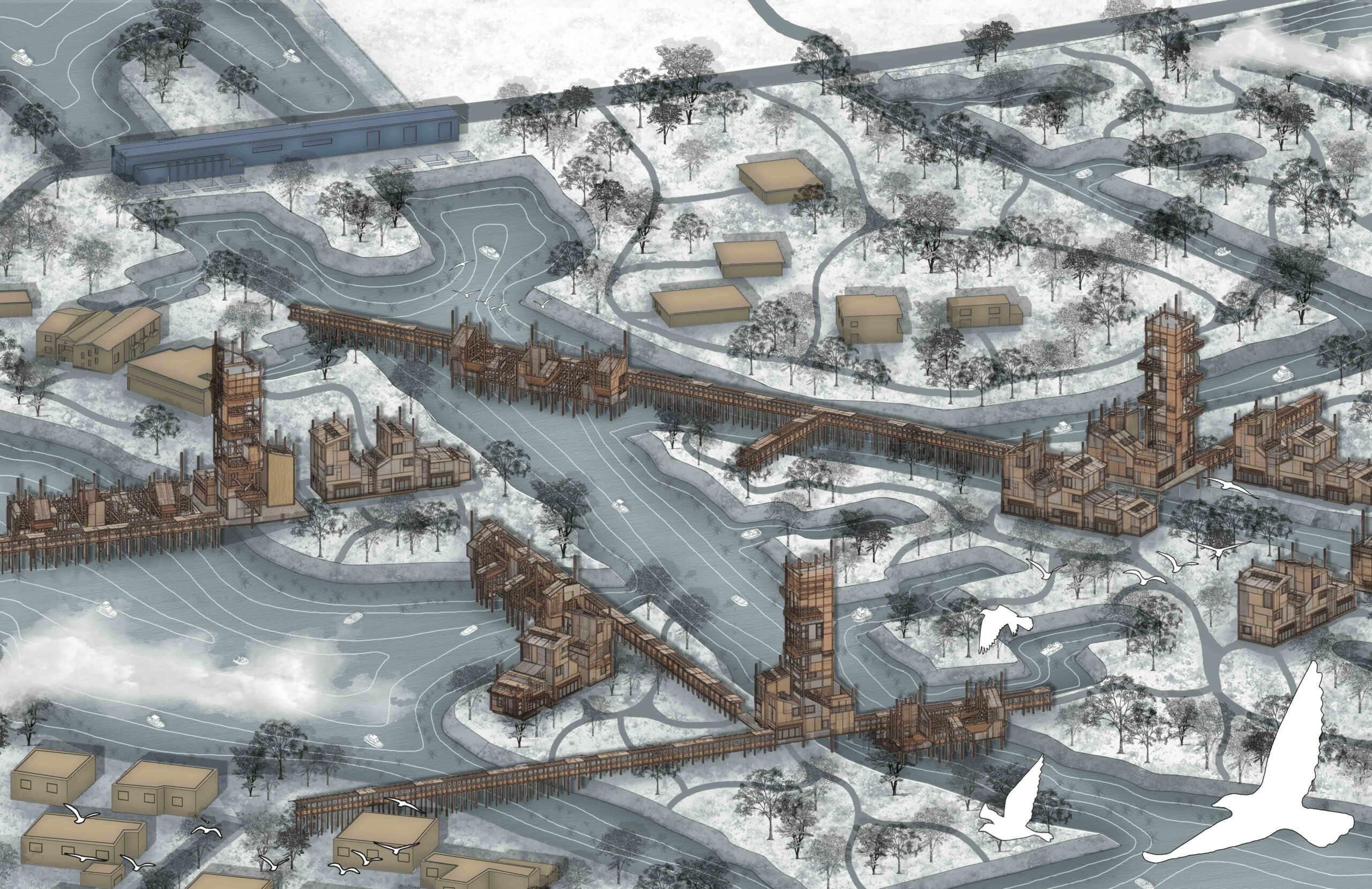
Design Studio 22 Master of Architecture (MArch RIBA Part 2)
TUTORS: Nasser Golzari & Yara Sharif
Architecture of Parts: A Landscape of Incubators
DS22 focuses on fragmented architectural landscapes, and challenges colonial practices by considering design as a tool for healing and empowering, giving voice to those rendered invisible.
Given the fractured landscape we live in today with its scarcity and uncertainty, we need to present alternative forms of engagement with our surroundings and a new resilient landscape; one that empowers community and interrogates different means of habitation. Architecture of Parts is envisioned as a typology for a Collective: a terrain of incubators dispersed across the scarred landscape to sustain life through interdependence rather than isolation.
The incubators act as agents of cultural, educational and environmental production, giving voice to those who are rendered invisible. Together, they create a resilient landscape and propose new forms of Collective to combat the scarcity and commodification of our resources and basic rights.
In response to the work of Rem Koolhaas, in which he challenged the generic city with its ‘one size fits all’ logic, and a thirst to exploit, extract and erase, Architecture of Parts envisioned the city being made of fragments: stitched together from parts that relate to each other aesthetically and could bring life to a fractured city in their collective nature.
Architecture of Parts formed the lens through which DS22 operated: parts as module, fragment, intervention, infrastructure, device and spatial commons. Each part was envisioned as complete in itself yet was open to connection, adaptation and appropriation by the incubators. We explored how these parts could be assembled into larger configurations; negotiate autonomy and collective action; and, collectively, how they could help to construct new socio-cultural typologies.
The parts were envisioned as Collectives hosting conditions for growth, repair and resilience with a social, ecological and cultural purpose. In other words, they acted as the spine in the Architecture of Parts. We tried to re-read our landscape through the lens of a society where some are compelled to change their priorities and practices in response to emergencies and scarcity.
The resulting projects varied in their scope and location. Students chose their own brief and focus cities including: Lisbon, Nicosia, Bucharest, Jerusalem, Gaza, New York, Tehran and other sites across the globe.
Archive of DS22’s work from previous years: