Design Studio 10 Master of Architecture (MArch RIBA Part 2)
TUTORS: Toby Burgess & Arthur Mamou-Mani
Network Futures
DS10 designs architecture as a living network – parametric, ecological and socially embedded – where data, matter and energy co-evolve.
Network Futures frames architecture through emerging data infrastructures and their planetary consequences. The studio investigated how AI, computation and energy systems reshape spatial, political and ecological realities. Drawing from biomimicry, arcology and network science, students explored parallels between natural and artificial systems, from mycelium to machine learning, rivers to fibre optics, neural to urban networks.
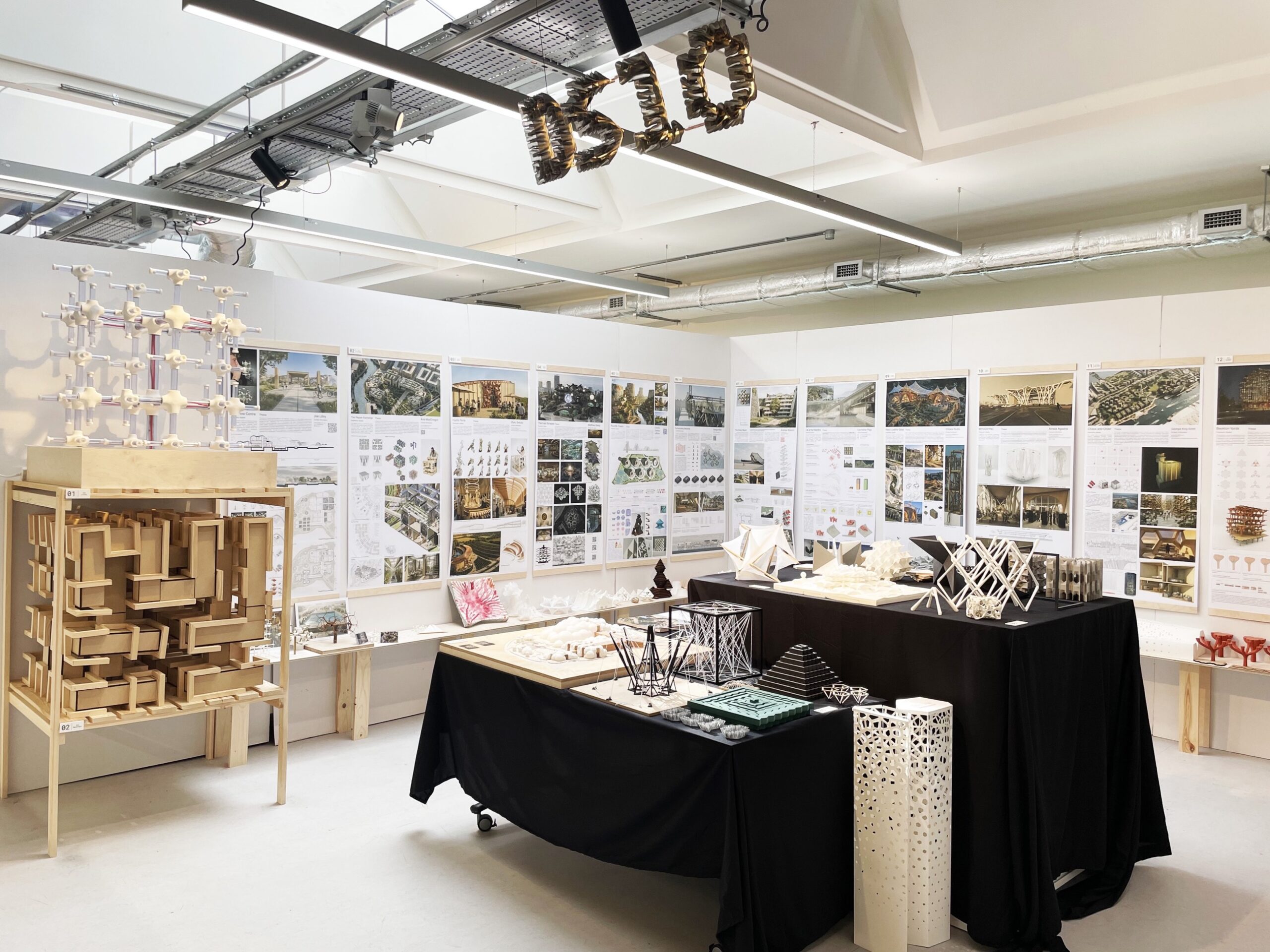
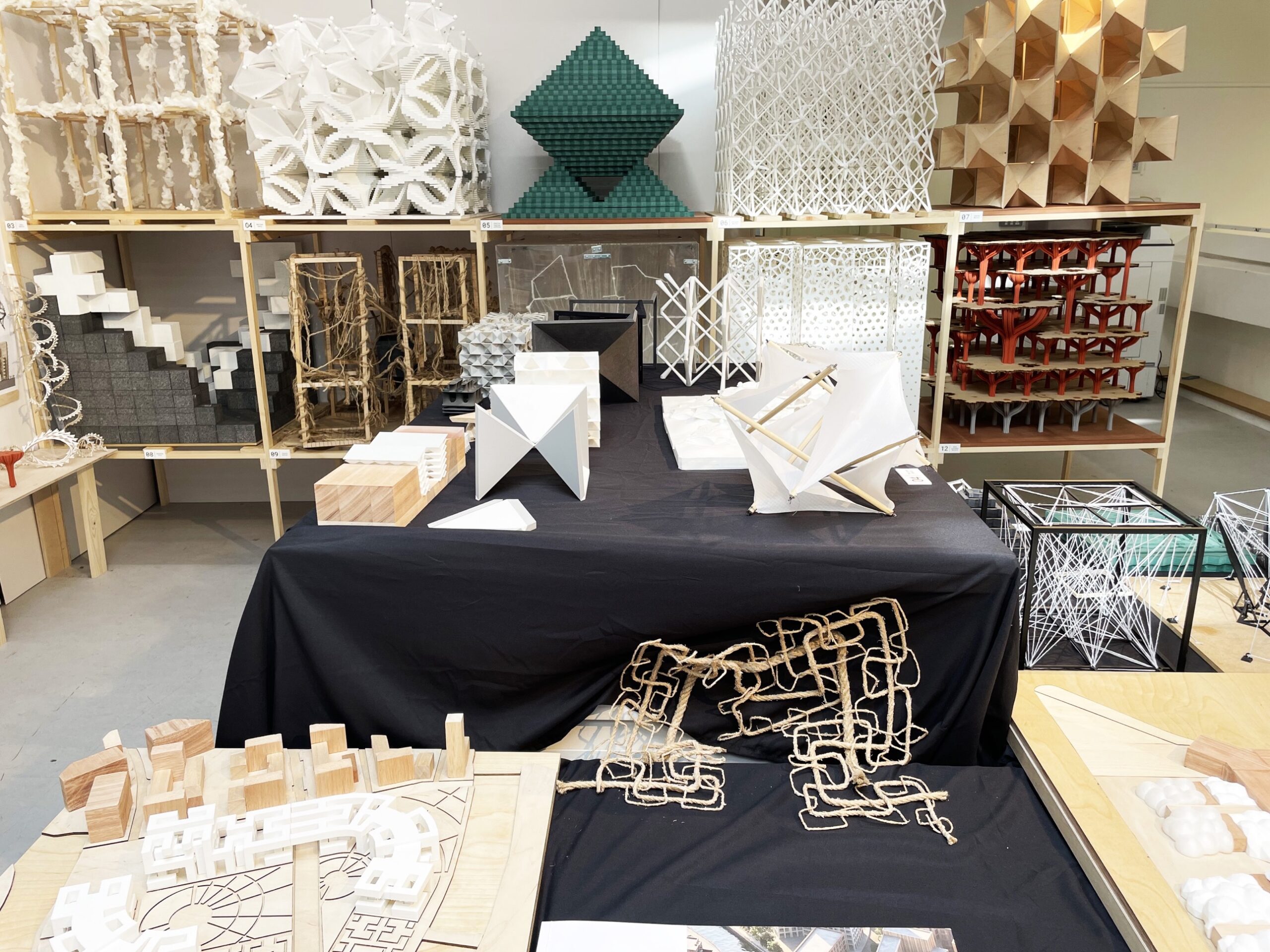
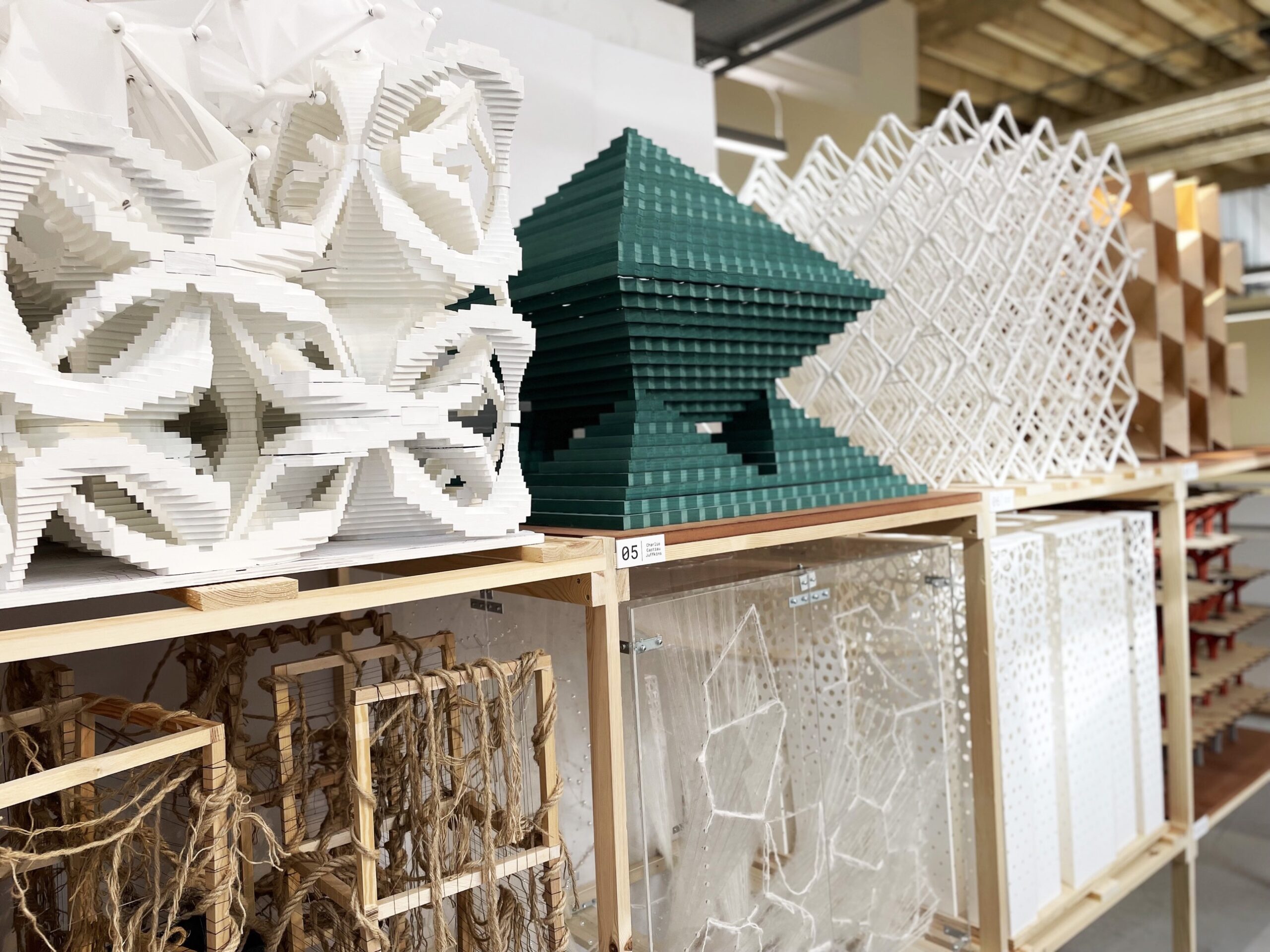
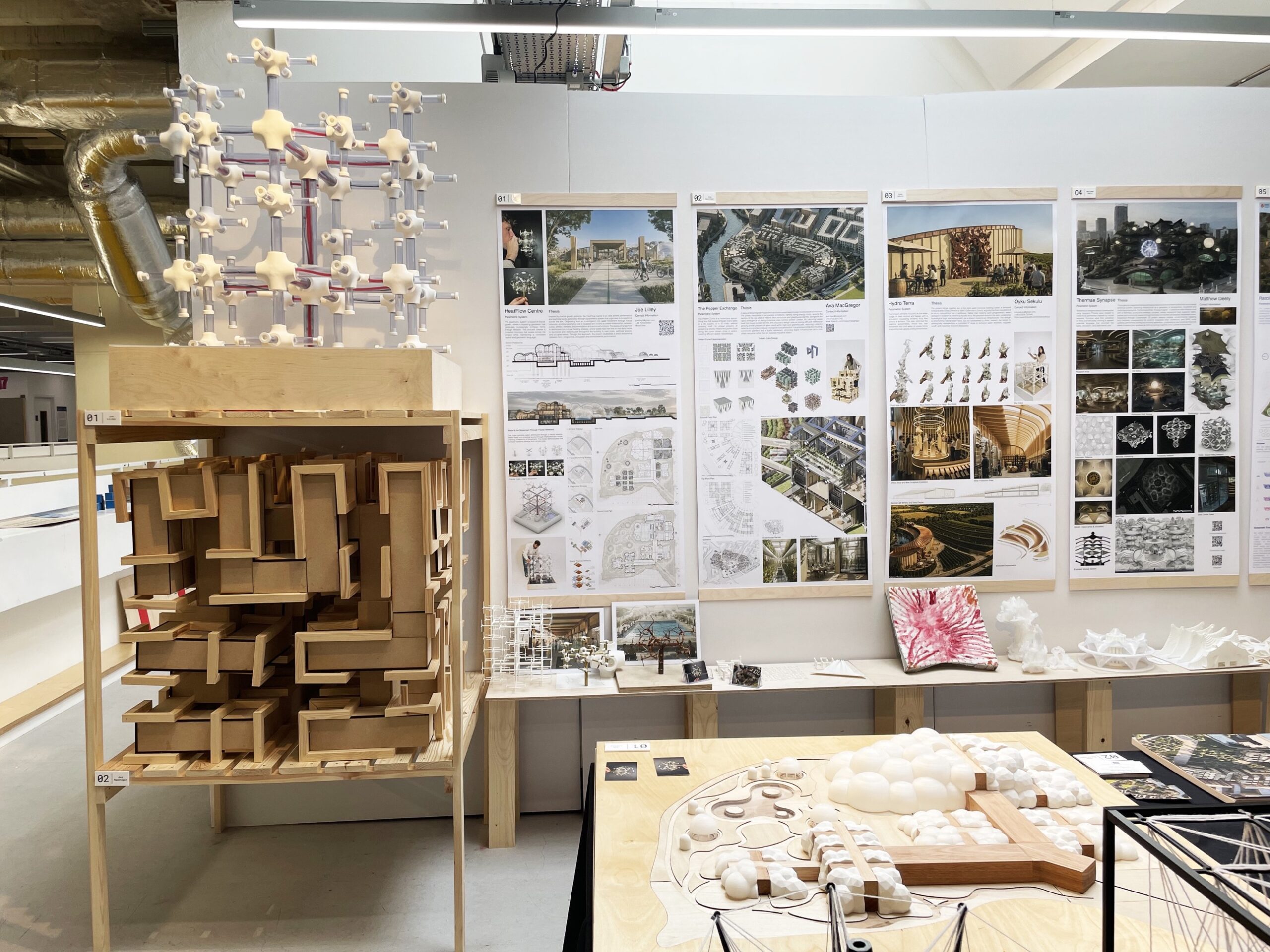
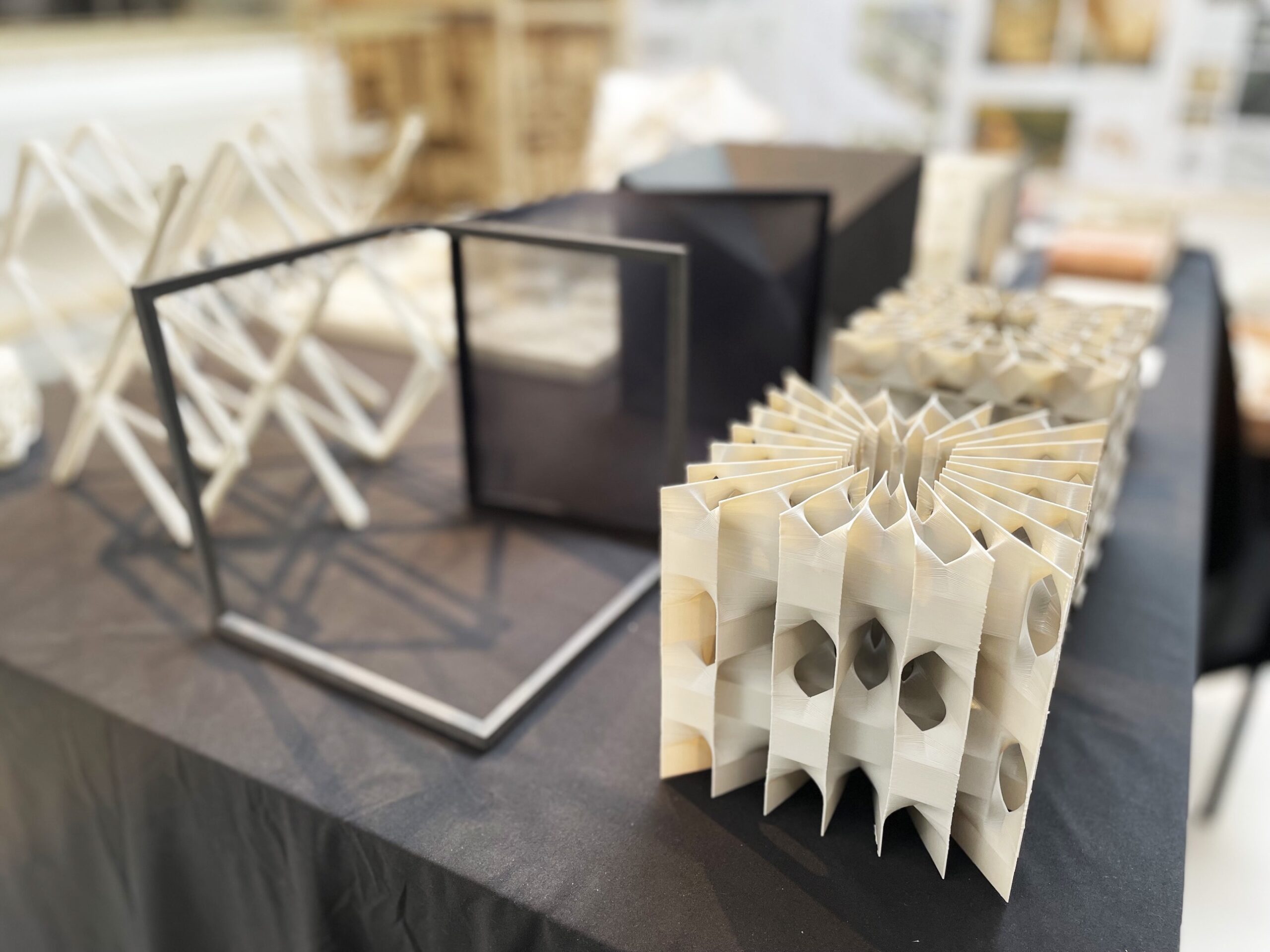
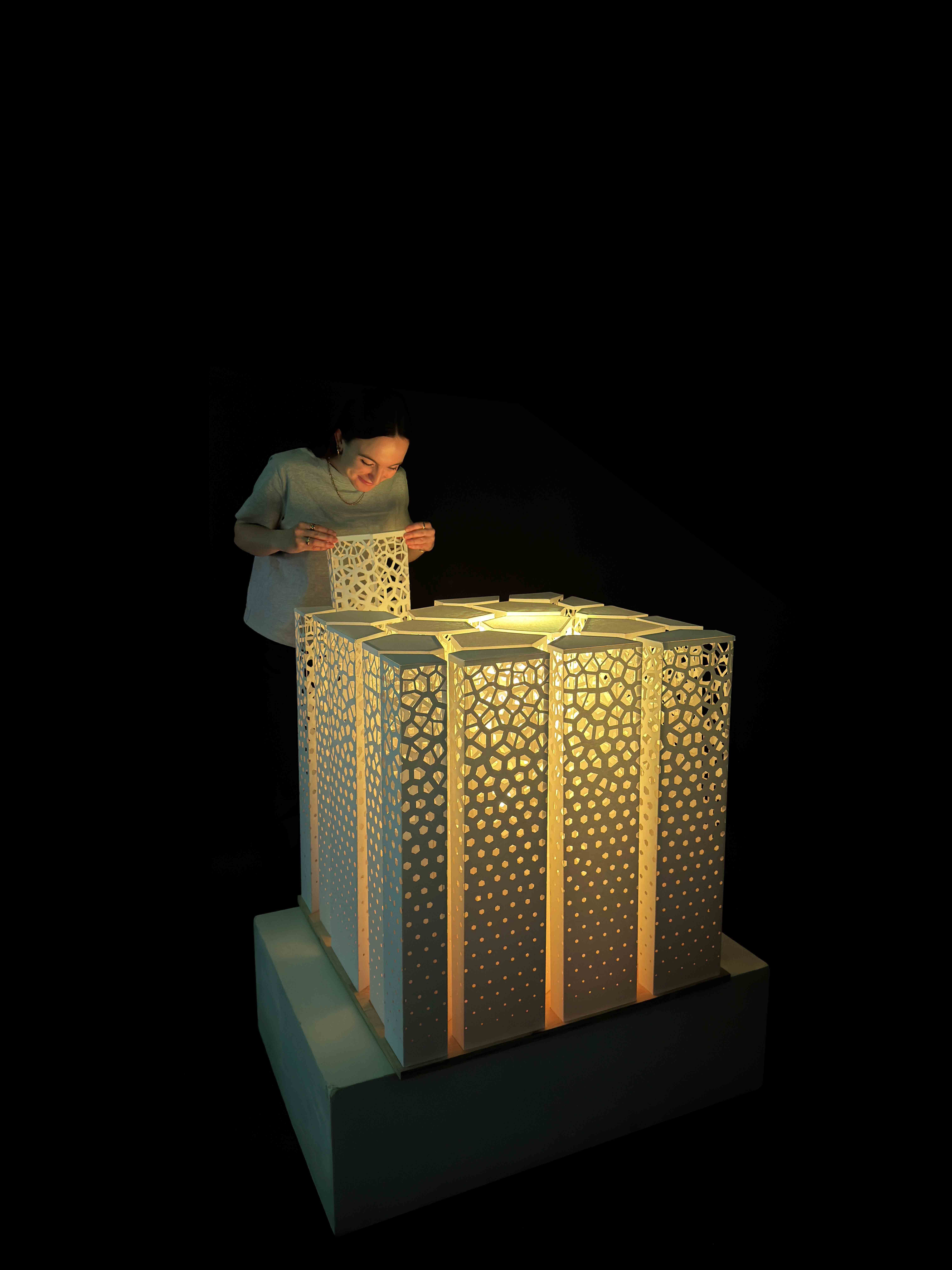
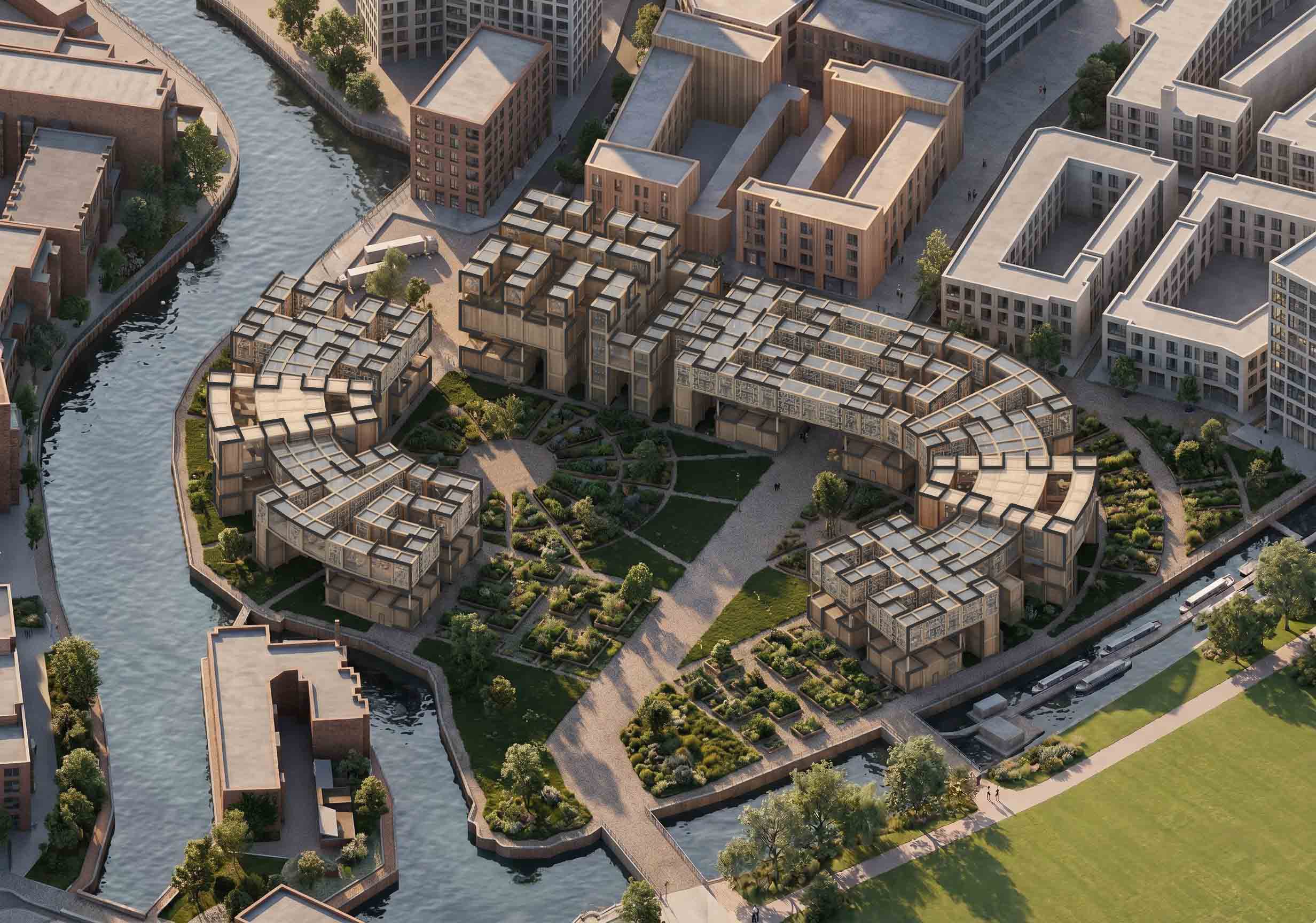
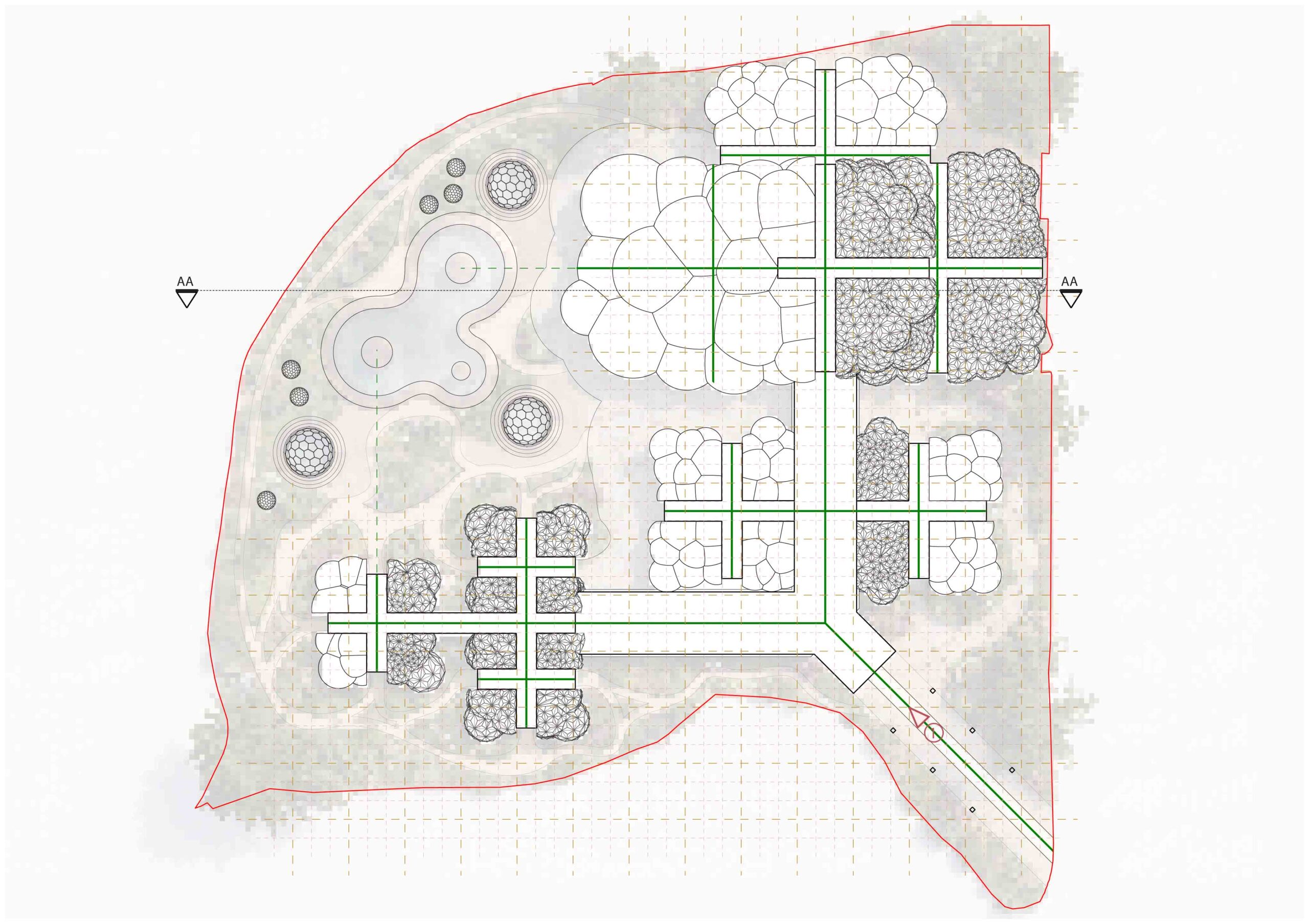
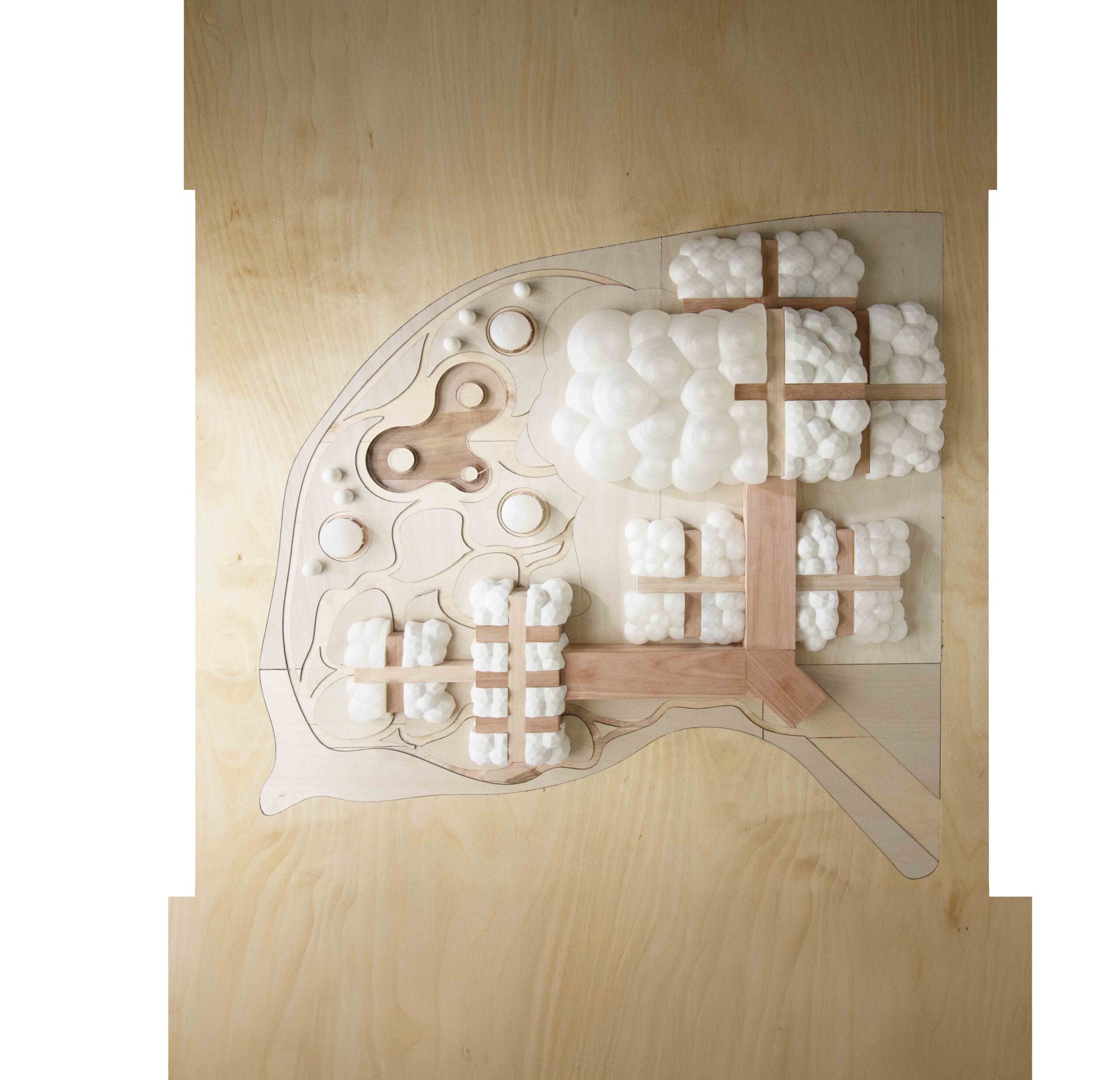
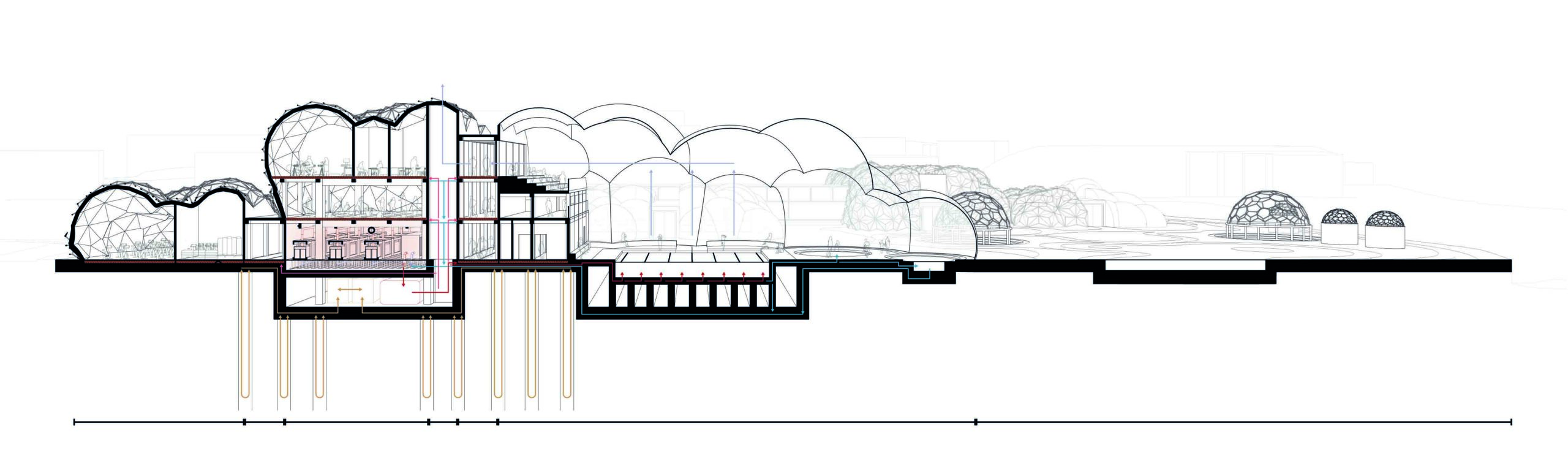
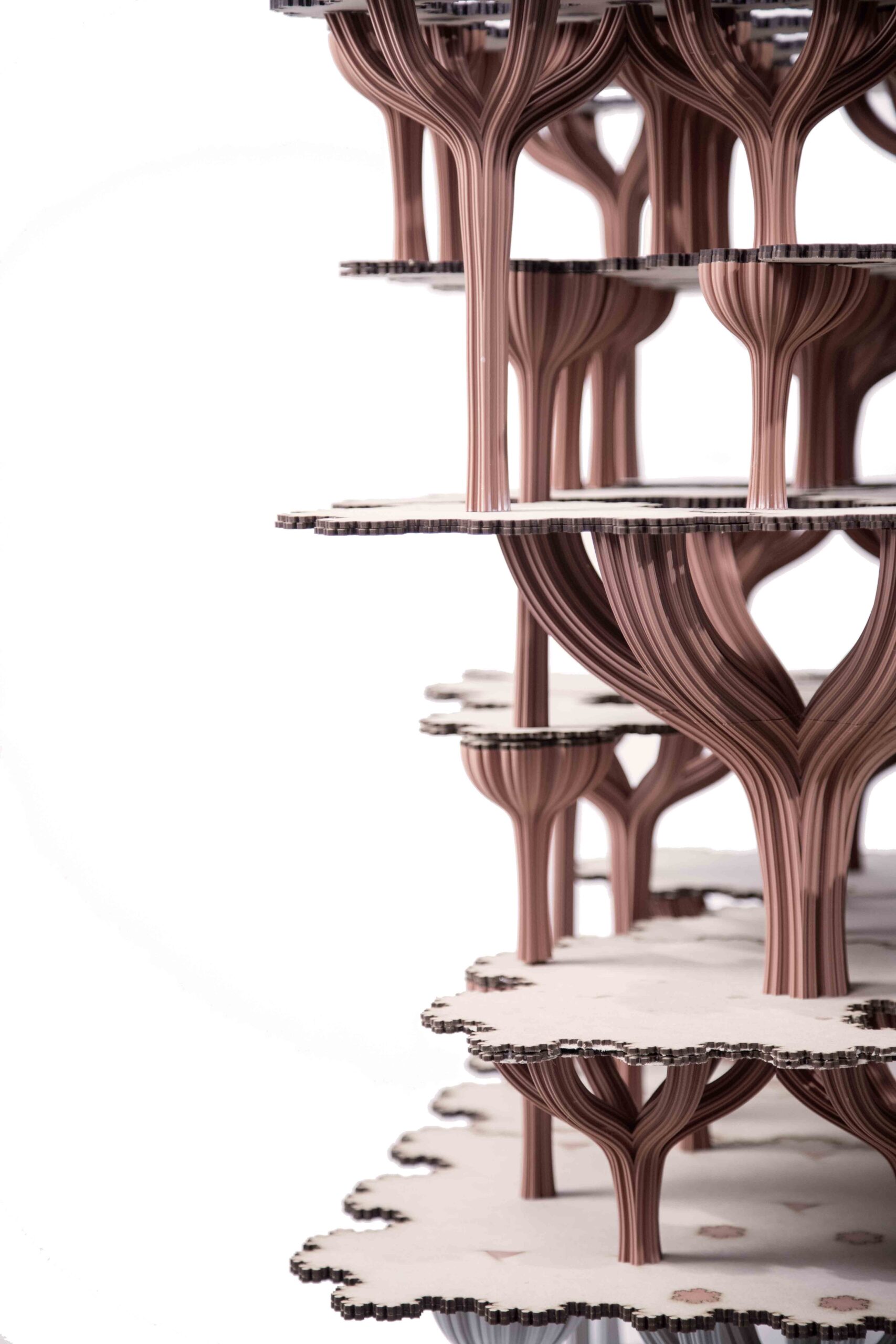
The studio asked how can data centres evolve from isolated, resource-intensive typologies into regenerative civic infrastructures. Students developed hybrid architectural systems that combined space-filling and surface-tiling networks which were tested through parametric modelling and large-scale physical prototypes, aligning directly with the brief’s dual digital and material exploration.
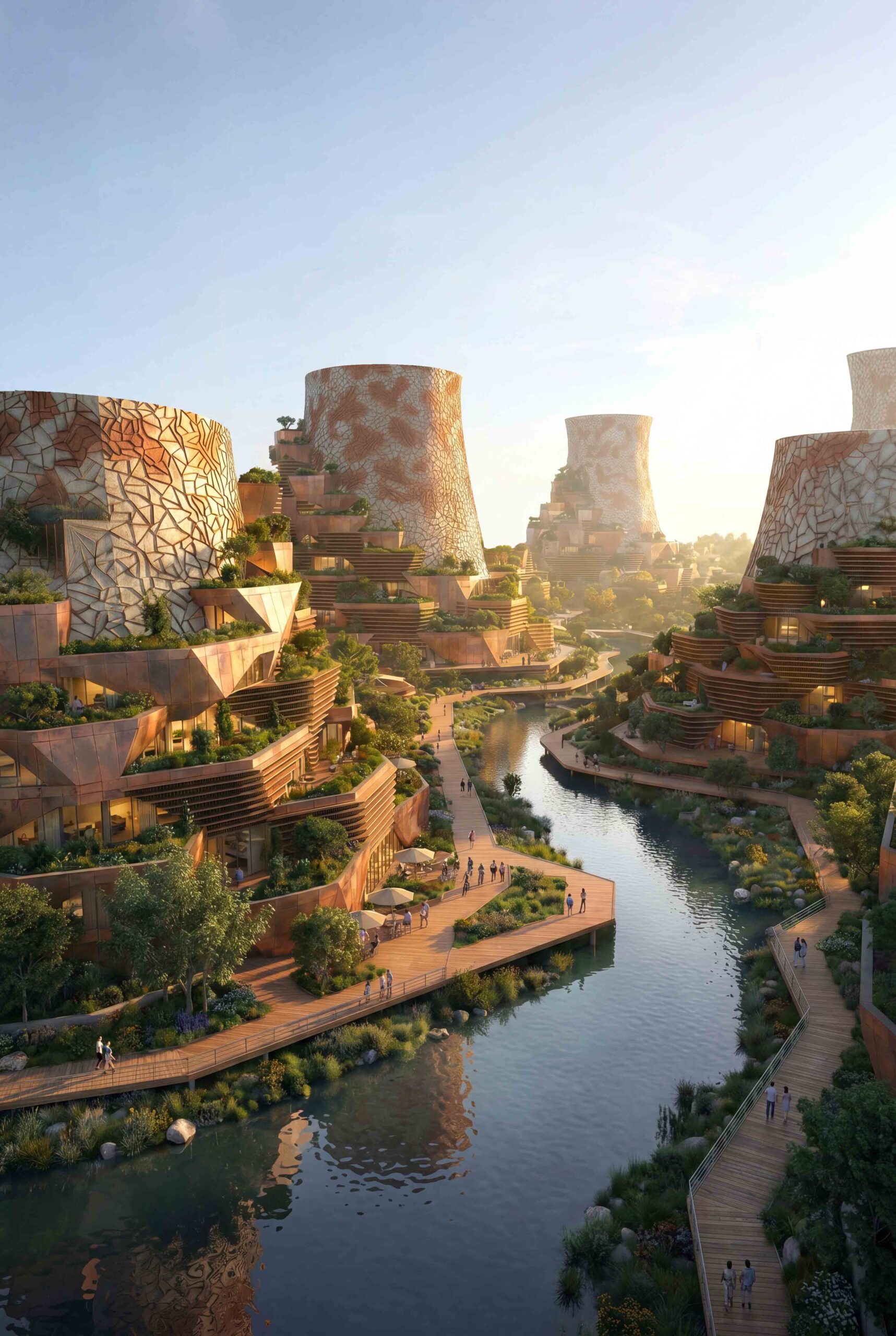
The work is driven by a dual ambition. Firstly, a desire to understand the hidden infrastructures of the digital age: cables, power, cooling and governance. And second, to re-imagine them as catalysts for sustainable and inclusive futures. Through world-building, students positioned projects within speculative 2050 scenarios, testing governance models, economic systems and cultural shifts, aligned to the brief’s emphasis on narrative and scenario building.
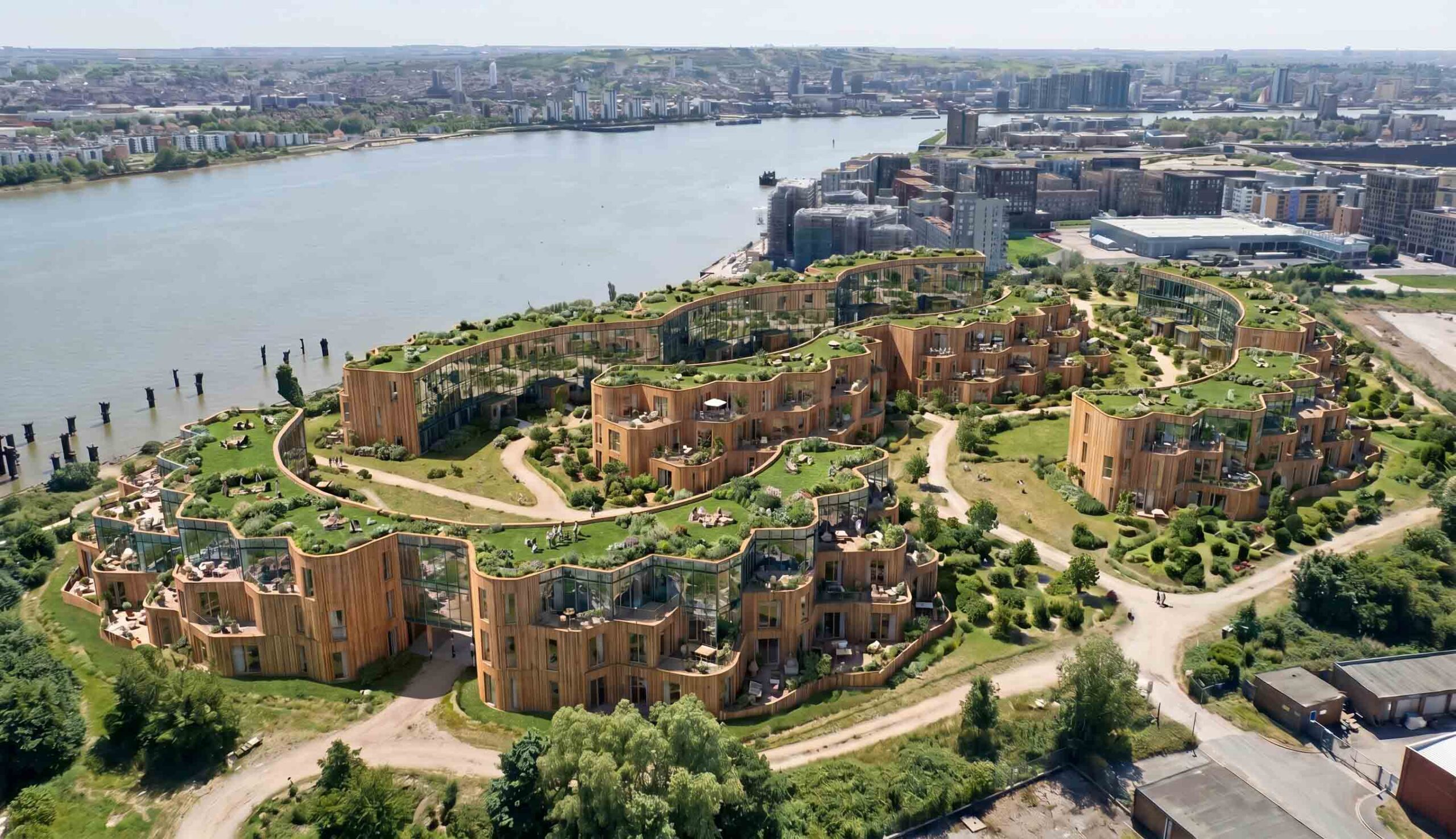
Project sites ranged across the UK, selected for their relationship to energy, connectivity and community. Locations included post-industrial landscapes and coastal infrastructures to peri-urban territories and energy-rich regions. Each site was analysed as a node within overlapping ecological, logistical, digital and social networks, reflecting the brief’s focus on real infrastructure and site-specific analysis.
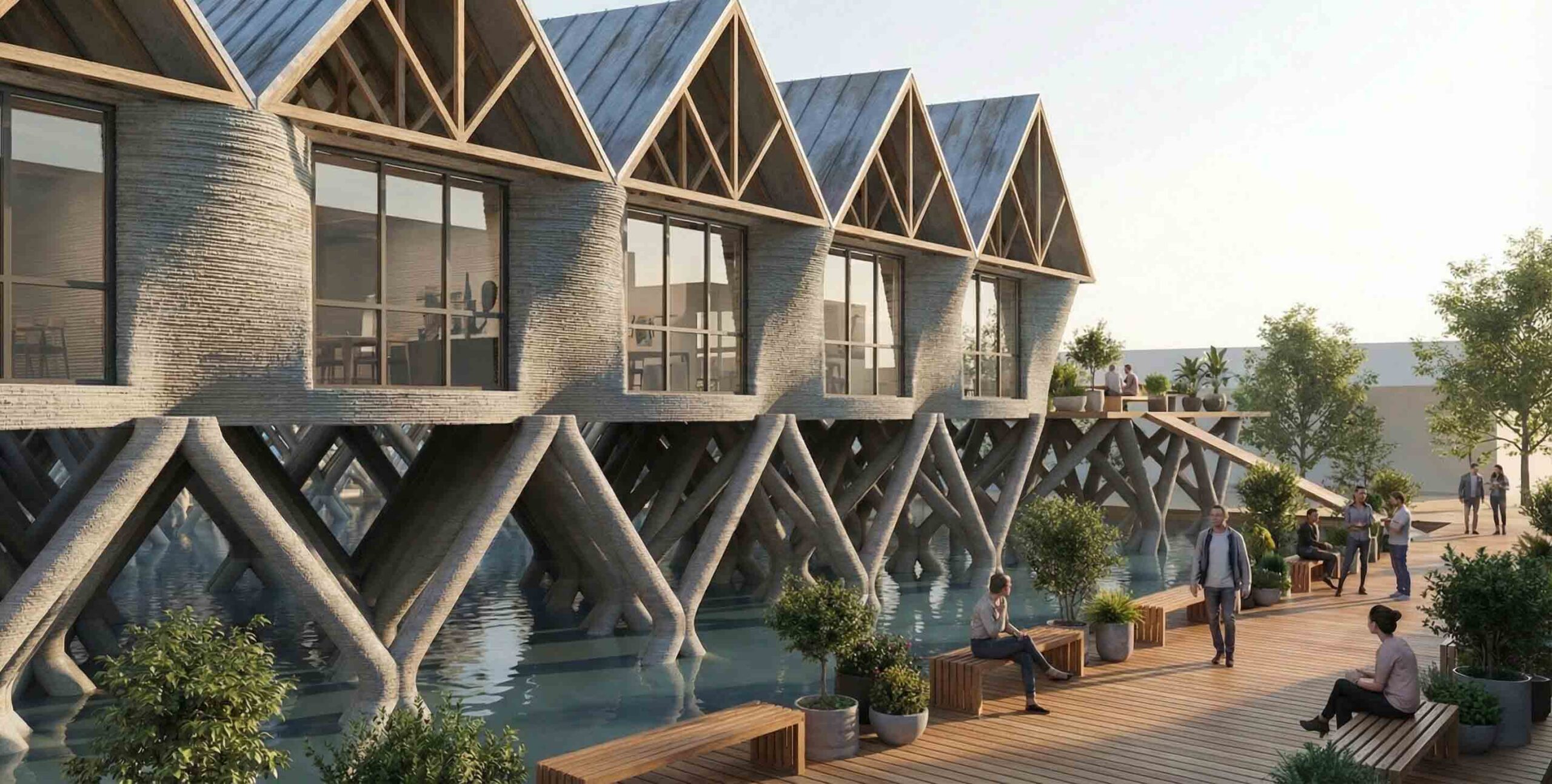
Outcomes proposed data centres that integrated housing, culture and wellness; the reuse of waste heat; and responses to climate and geopolitical risk. Projects were grounded in structural logic, environmental performance and fabrication thinking, supported by both digital models and large-scale physical prototypes.
The work demonstrated a shift from extractive to symbiotic models, where computation supports both human and ecological systems, and architecture becomes an active participant in planetary networks.
Archive of DS10’s work from previous years: