Our Canopy at Clitterhouse Farm Beyond Studio
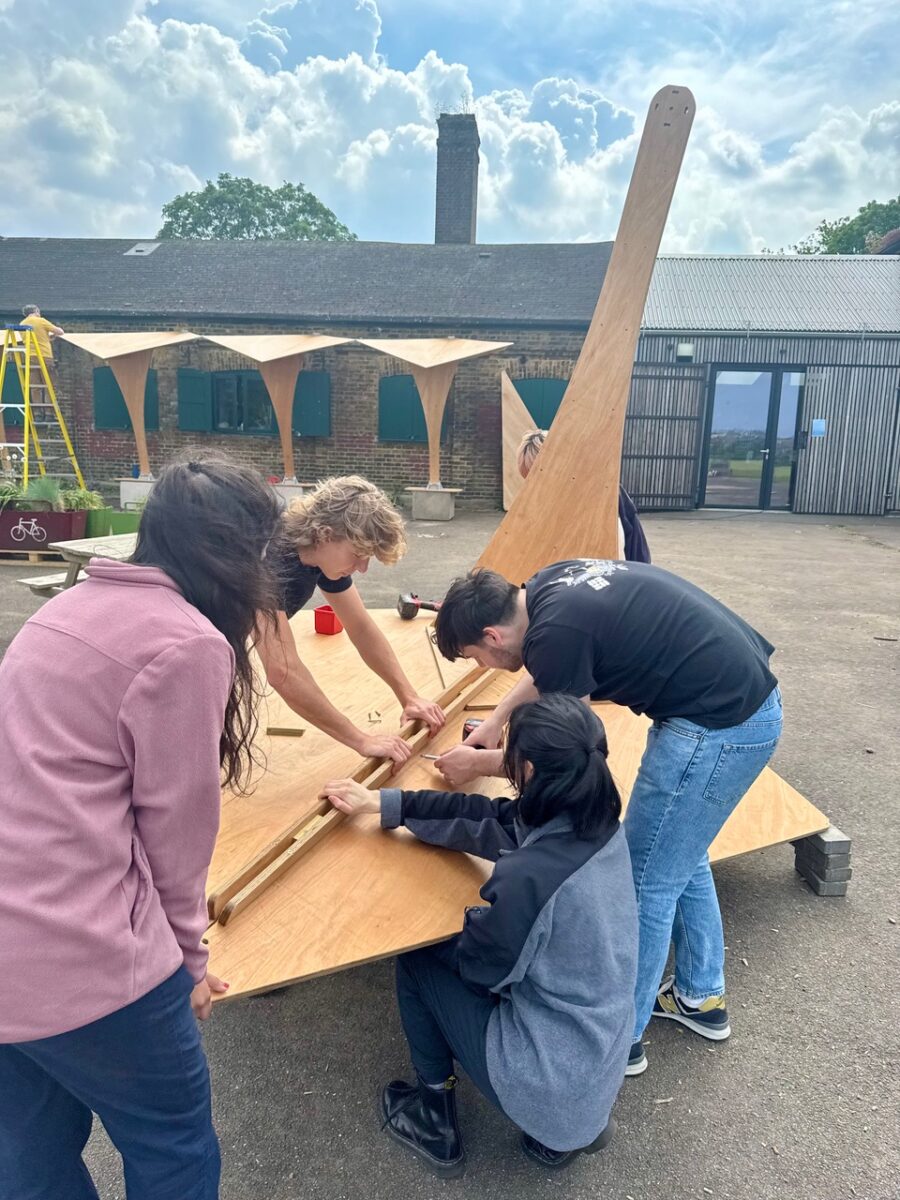
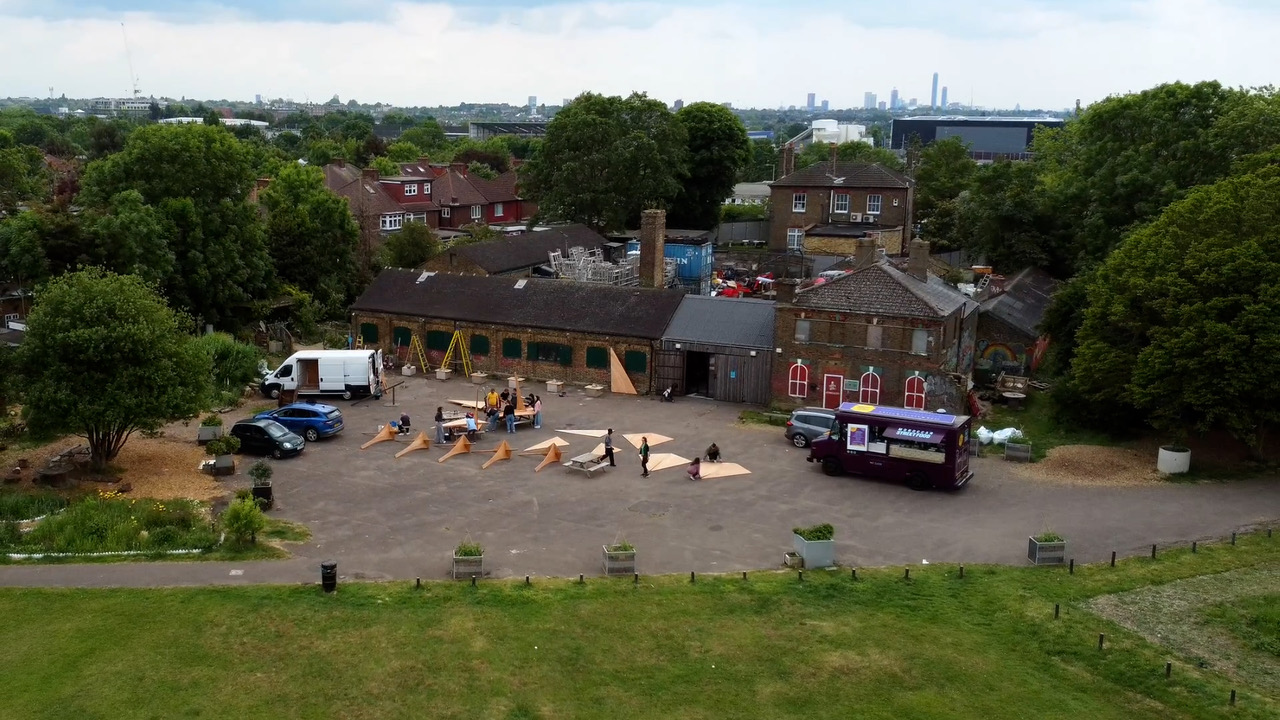
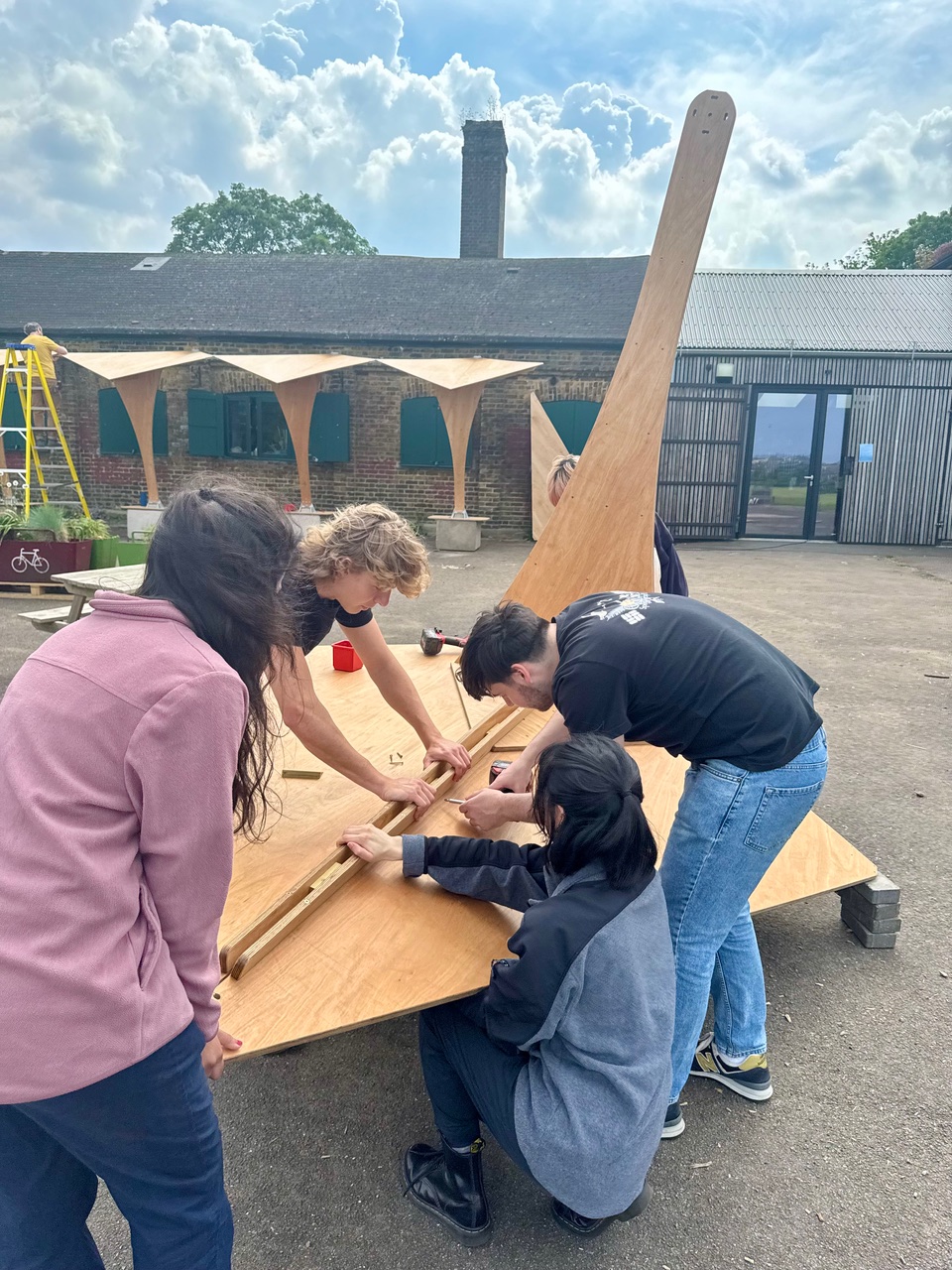
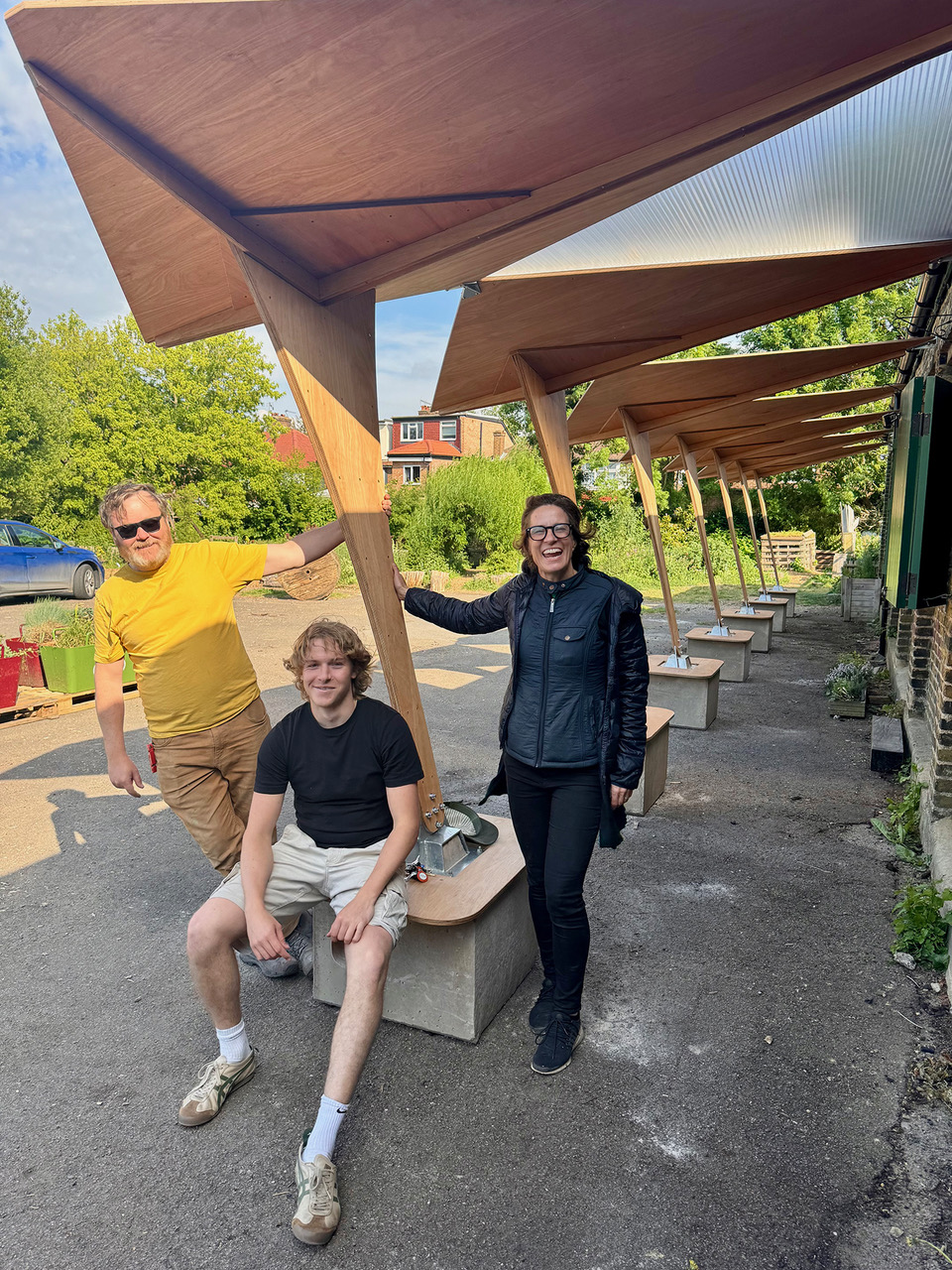
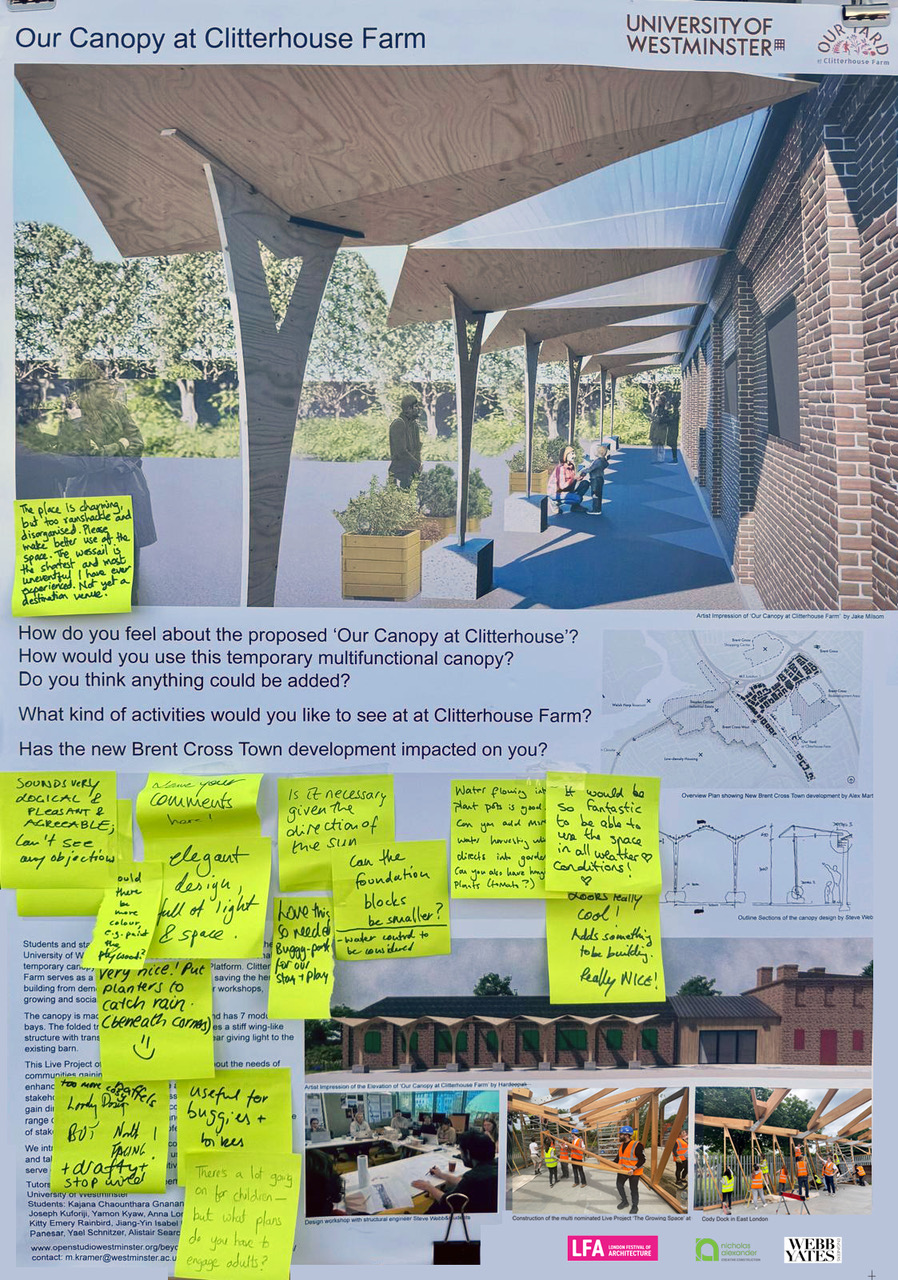
Our Live Project: “Our Canopy at Clitterhouse Farm” in Brent Cross is a multifunctional structure which was co-created a vibrant grassroots community and our making partner (Nicholas Alexander) and structural engineering partner Steve Webb with students from DS20.
Clitterhouse Farm serves as a beacon of local engagement, saving the heritage building from demolition and providing space for workshops, growing and social activities, encouraging and promoting a wide range of voices from the local community. Our Yard’s mission is to foster resilient, sustainable communities in and around Clitterhouse Farm and Northwest London. The aim is to serve as a community-led exemplar for embedding social value into regeneration projects.
By conserving and enhancing this significant heritage site, Our Yard strives to create a vibrant, inclusive space where communities and small businesses can come together to address social and environmental challenges locally and nationally. Our Yard celebrates local history, promote sustainable living, and support the arts and culture. Their goal is to offer opportunities, events, services, and facilities that are welcoming, engaging, and financially accessible to all.
Initial funding for the Live Project came from CETI, while the community secured most of the construction funds themselves. The project is integrated in our Master’s studio brief, which explored challenges of urban regeneration, gentrification, and how these forces can be made more equitable. It’s a physical response to those larger questions. Through projects like this, we contribute to the social fabric, civic engagement, and the green transition of neighbourhoods.
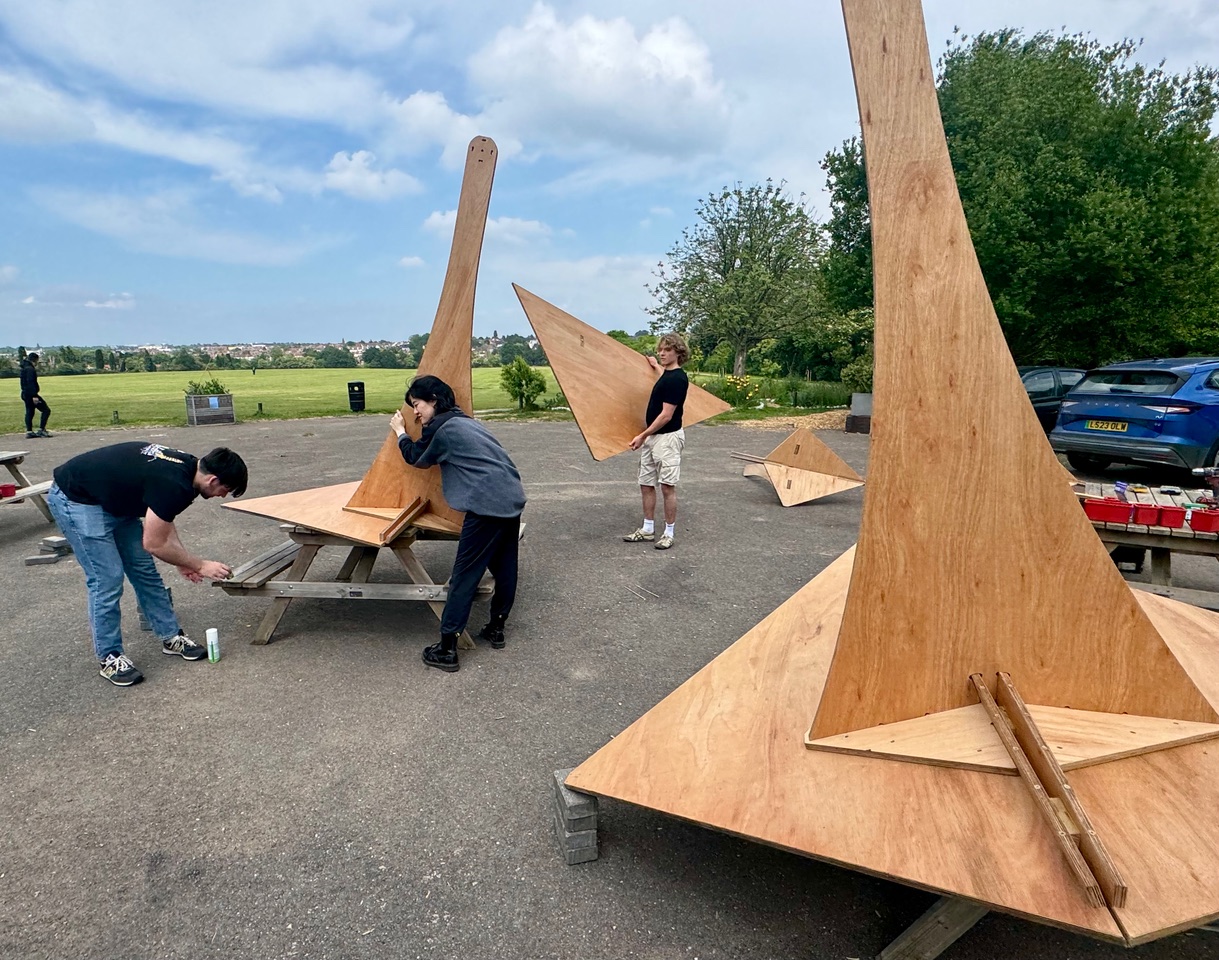
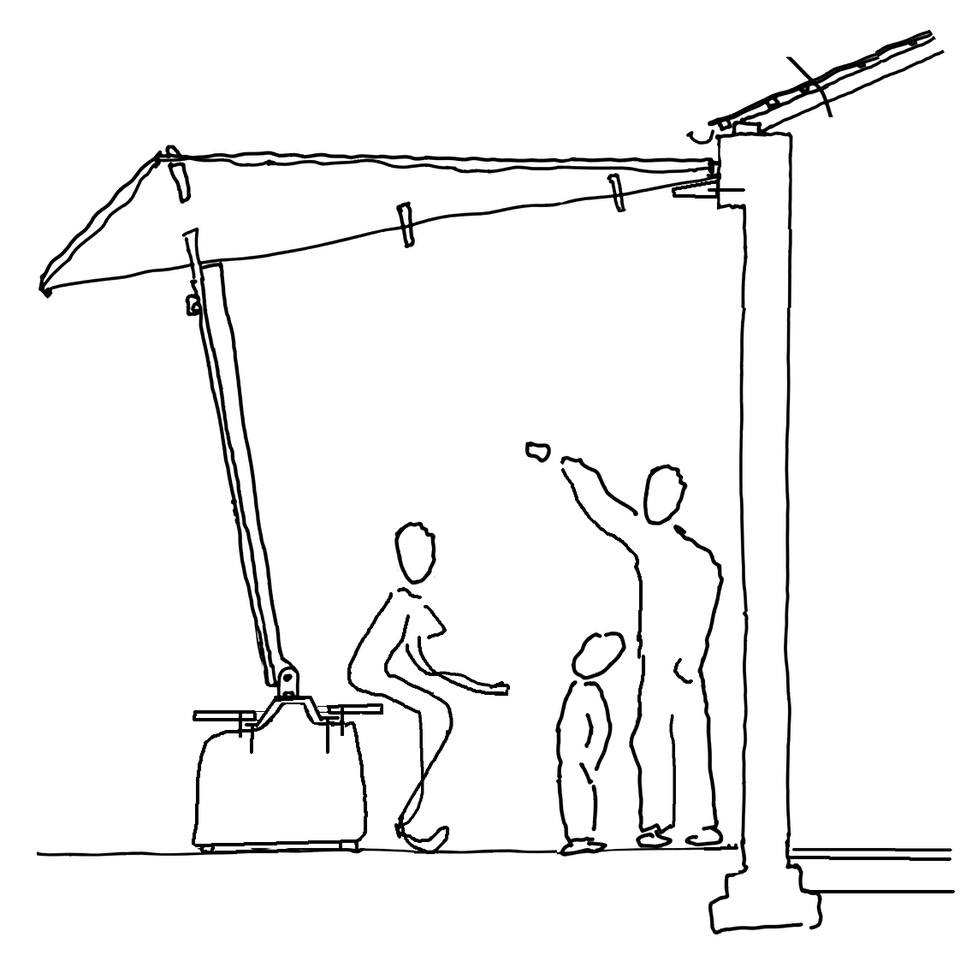
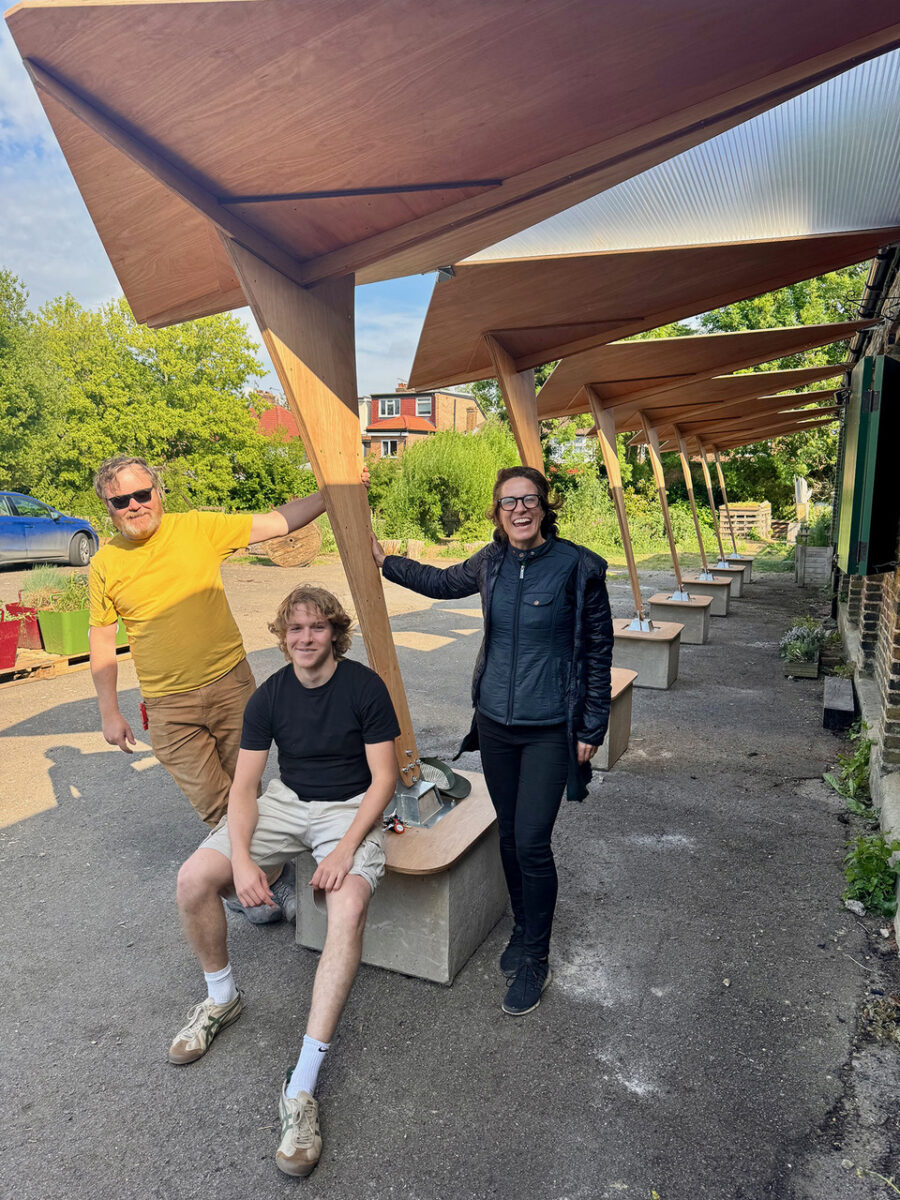
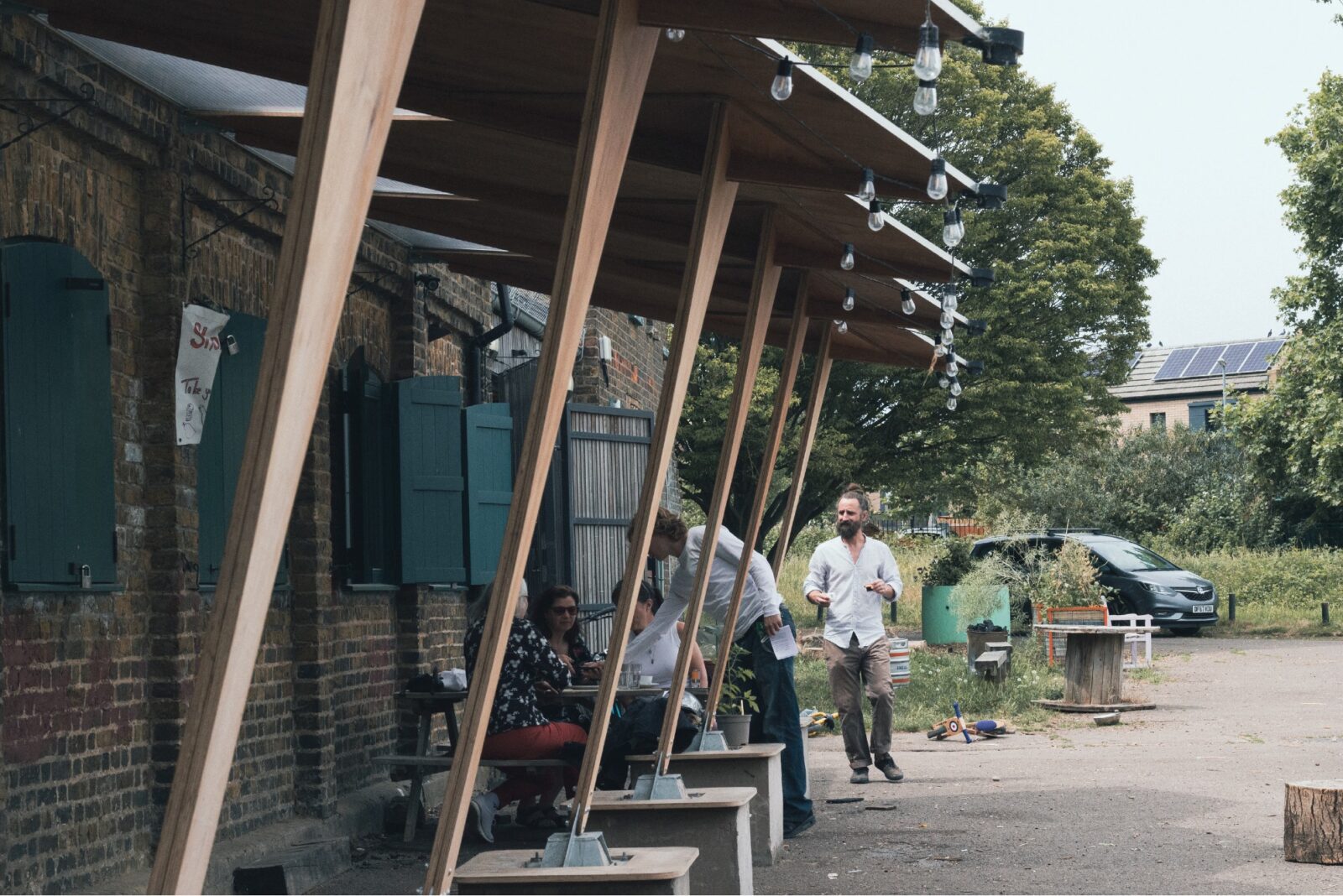
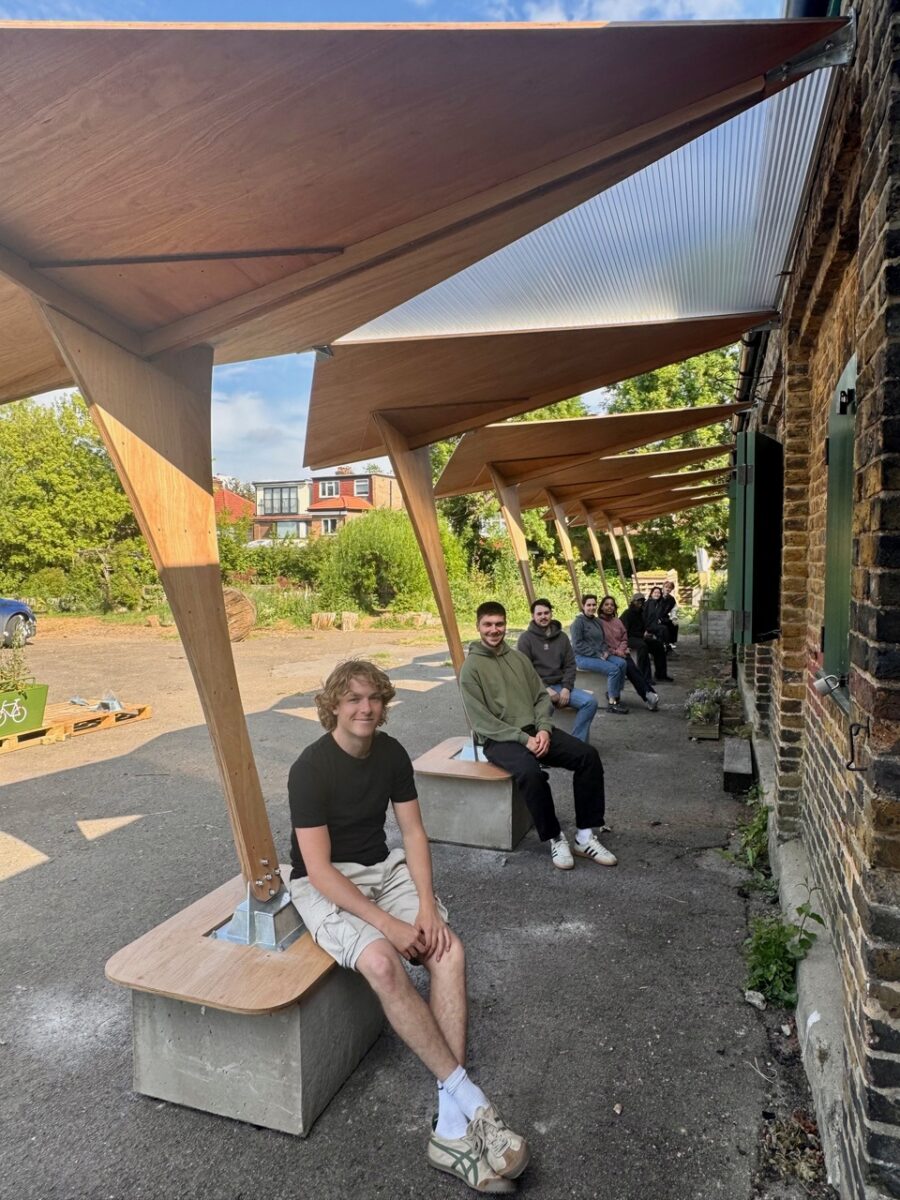
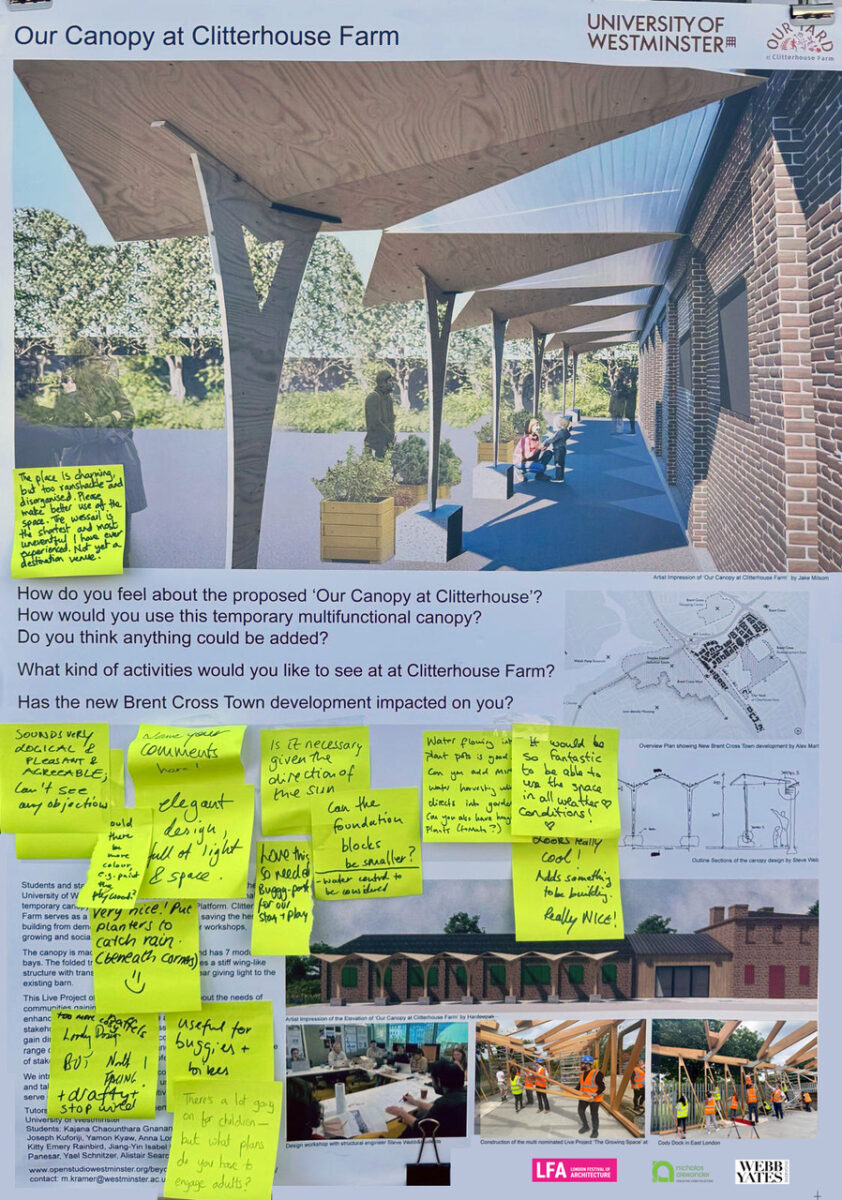
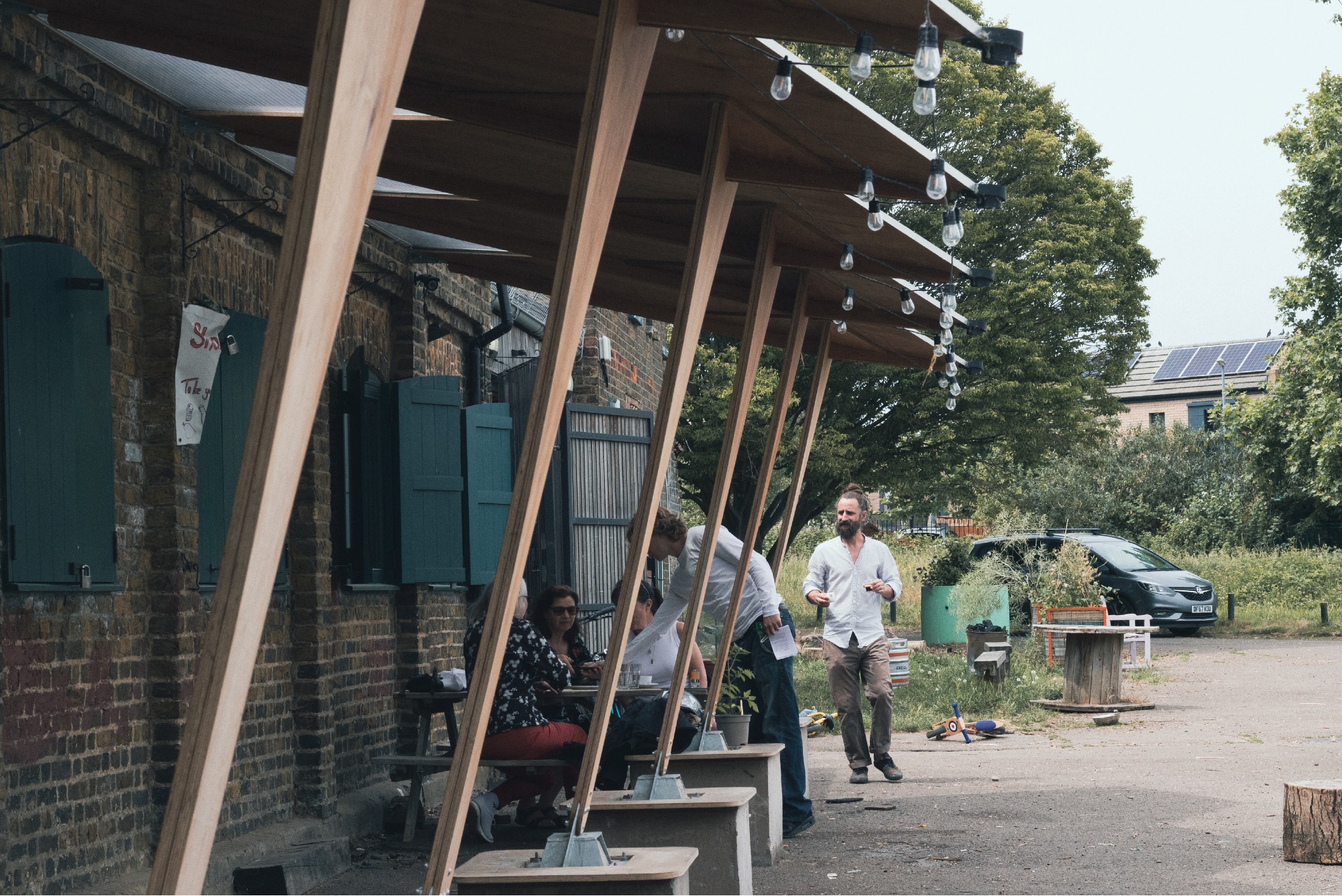
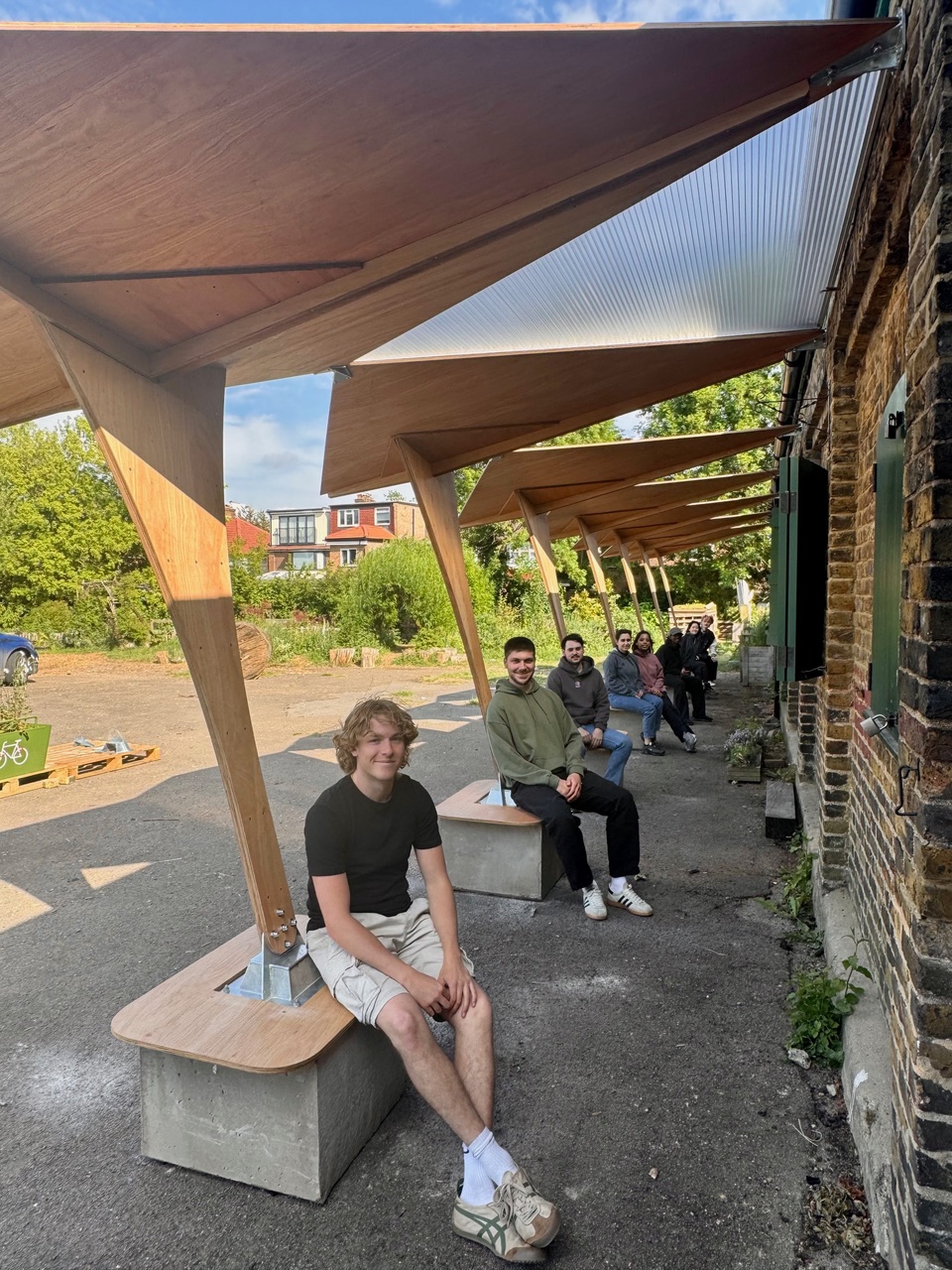
Our Canopy provides shelter to host large events with a large covering from weather. The construction is made out of CNC-cut plywood and has 7 modular bays. The folded triangulation of the canopy provides a stiff wing- like structure with translucent cut-outs towards the rear giving light to the existing barn. Our Yard’s supports resilient, sustainable communities in and around Clitterhouse Farm, championing local heritage, sustainability, arts, and culture. The aim is to create an inclusive space where communities and small businesses collaborate to meet social and environmental needs.
This Live Project is more than a temporary intervention – it leaves a lasting legacy, both in the built environment and in the people involved. Participants not only develop practical construction and design skills, but also gain a deeper understanding of social responsibility and the power of co-creation. By engaging directly with the communities we serve, we learn to listen, adapt, and respond with empathy – shaping spaces that reflect shared values and local identity. The process fosters mutual learning: communities share their lived experiences, and participants contribute their creativity, energy, and problem-solving. This reciprocal exchange strengthens trust and encourages long-term thinking about how we build and who we build for. As we reflect on the outcomes, it becomes clear that the impact goes beyond physical structures – it’s about empowerment, capacity-building, and inspiring new approaches to design education and practice. The Live Project becomes a model for future work: grounded in collaboration, committed to care, and shaped by the people it’s meant to serve.
“The Live Project is a project that arguably bridges the gap between academia and the real world. We work with real clients, reaching out and making real interventions. It’s all about authentic learning, that’s at the heart of it. You have such an amazing world in academia, and then you go out into the real world, and it’s so different, the constraints are so different. There is a lot of knowledge out there, and that’s what we want to tap into and help nurture.”
“The Live Project is mainly based on group work and teamwork, but there’s a lot of learning that feeds into individual work as well for example, in technical studies and vice versa. Students do their own analysis and engagement with local communities, and that can feed back into the Live Project. We record the group work, the process, the engagement We ask students to take a lot of photos of what’s happening, and then reflect on that process and there’s a lot of learning in the reflection itself. That reflection is something that’s also really easy to assess. It’s about being involved from the very beginning, through all the work stages, right through to the build. Normally, an architect isn’t involved in the construction itself, but when you do this, you learn so much and you become a better designer.”
“The process is so important because normally you just see the end result. As an architect, you might draw a line and then see the final product, but you often don’t see the process in between, and there’s so much knowledge and important design in Stage Four. When you collaborate with makers and fabricators, you gain that site knowledge and that informs your designs in a really meaningful way. Students who include the Live Project and its process in their portfolios when they go to interviews and present it, he employers really value that. It feels empowering, it feels like people can come together, and we have people power. You come out of something like this and you feel like you can make a difference and I think you learn and support each other. So I think it’s a huge privilege, on one level, because we can make a difference, and the students really understand that.” Maria Kramer.
“It’s usually enriching. It gives students a much broader and more holistic sense of how design works, alongside construction, fabrication, and implementation. I think the key thing is to consider the capacity of the students, what you can realistically expect them to do within their coursework, and within the level of skills they have, which will vary across the group. Then, it’s about positioning the work the students are going to do within a realistic framework of the overall project.” Shahed Saleem.
Values: Connecting & Collaborating: Bringing people together across generations to build community resilience.
Cultivating: Promoting sustainable living through organic and permaculture practices.
Creating: Supporting accessible arts, crafts, and skill-sharing opportunities.
Caring: Restoring heritage spaces with care for people and the environment.
Celebrating: Honouring local history and community achievements to foster pride and belonging.
Clitterhouse Farm has a rich history dating back to at least the 14th century, with its name believed to originate from “clite,” an old English word for clay. Over the centuries, the site evolved from farmland serving the local manor into a working farm supporting the surrounding communities of what is now North West London. By the 20th century, the farm had become part of the expanding urban landscape, falling into decline as development encroached. But in 2013, a group of local residents came together with a shared vision: to rescue Clitterhouse Farm’s historic buildings and repurpose them as a vibrant community hub. This vision became Our Yard, a community-led social enterprise dedicated to restoring and revitalizing the farm. Through grassroots activism, partnership-building, and tireless volunteer support, Our Yard has transformed the site into a centre for social enterprise, sustainable living, and community cohesion.
TUTORS: Maria Kramer and Shahed Saleem
STUDENTS:
- Kajana Gnanan
- Morgan Doyle
- Emily Ivan
- Joseph Kuforiji
- Yamon Kyaw
- Anna Long
- Jake Milsom
- Tugce Yigit
- Kitty Emery Rainbird
- Isabel Liu
- Alex Marton
- Hardeepak Singh Panesar
- Yael Schnitzer
- Alistair Search
- Yuelin Zhou
FUNDER: CETI + Clitterhouse Farm
PARTNERS: Nicholas Alexander, Webb Yates Engineers