Blog

Technical Studies Lecture Series: “The Cosmic Economy of Eladio Dieste” Prof Remo Pedreschi, University of Edinburgh Thursday, December 5, M416, Marylebone Campus, 18:30

When: Thursday, 5th of December, 18:30

Where: M416, Robin Evans Room, 35 Marylebone Road, London NW1 5LS

Eladio Dieste (1917-2000) was a Uruguyan engineer who studied in the Faculty of Engineering at the University of Montevideo. In his book on the work of Dieste, The Engineer’s Contribution to Contemporary Architecture: Eladio Dieste, Remo Pedreschi explains that Dieste’s university education was formative and crucially provided him with the fundamentals of maths and physics, which was so instrumental in his conception of structures. Some of the earliest work that Dieste undertook as an engineer was on concrete shell structures and on first glance whilst studying projects such as his free-standing vaults for ANCAP in Montevideo (1955) you could easily be forgiven for thinking that they were fabricated out of reinforced concrete. In fact, these shells were made from a unique system devised by Dieste of clay bricks reinforced with steel cables and cement. As with other great structural ‘artists’ of that period such as Felix Candela and Pier Luigi Nervi, Dieste was engineer, builder (and latterly architect) of his projects. He established the firm Dieste y Montañez in 1955 and as Remo Pedreschi explains “…the firm was in effect, a major design and build contractor that had developed its own innovative construction techniques.”

Remo Pedreschi is a chartered engineer and Professor of Architectural Technology at the University of Edinburgh. He joined that university after holding senior positions in the construction industry and continues to work with industry. He has undertaken research in a range of materials including concrete, steel, timber, and stone and currently is Director of the Master’s programme in Material Practice. He obtained his PhD for research in post-tensioned brickwork and has published a number of scientific papers in his area. This research led to his interest in the work of Eladio Dieste. He developed and co-edited a series of books exploring the relationship between engineering and architecture, The Engineer’s Contribution to Architecture, for which he wrote the monograph on Eladio Dieste. Remo was also the co-author of the seminal Fabric Formwork book.

For lecture details contact Will McLean

w.f.mclean@westminster.ac.uk

https://technicalstudies.tumblr.com/

Thomas McLucas’ last year’s project for DS2.6 selected for exhibition at the RIBA Architecture Gallery

The work of Thomas McLucas, Architecture BA Honours student, was selected from entries drawn across the UK for the exhibition ‘INDUSTRIALISED’ at the Royal Institute of British Architects (RIBA).

University of Westminster | News

The RIBA exhibition titled ‘INDUSTRIALISED’ shows drawings by over 40 students from 20 schools of architecture across the UK. It parallels another exhibition in the Architecture Gallery called ‘Beyond Bauhaus’, both exhibitions respond to the centenary of the opening of the historic Bauhaus school. 

The Bauhaus school was established under the Weimar Republic in 1919 and closed in 1933 under the Nazis. The school’s teaching program cohered around a novel concept of industrial design, which for them meant the production of a universal, totally integrated environment.

This year, the BA Architecture Studio DS2/6 set out to work in a truly post-industrial environment in a project led by Dr Victoria Watson, Senior Lecturer at the University. The project was called CAR PARK to COSMOS, it asked students to remodel a car park in Stevenage for a hypothetical organisation, ‘The International Institute of Cosmism (IIC)’, who plan to develop the car park as a place of post-industrial work, specifically to make Cosmist movies. Students were encouraged to think like Russian Cosmists and to invent their own utopias, just like architects of the Bauhaus would have done. 

Thomas McLucas’ approach was heavily inspired by the monumentalism of the Soviet Union, as can be seen, for example, in the Shukov tower or Fernsehturm in Berlin, which the students visited on their field trip. 

Speaking about his work, Thomas said: “It is highly exciting to be exhibited at the RIBA as part of the Bauhaus centenary celebrations. It is important to reflect on our industrial past as we are in a new technological revolution, one where what we are producing is less material but no less impactful.

“My project acts as a critique of the post-industrial nature of mass media, aiming to highlight this by pulling the production and transmission into one transparent structure. Transparent, in that activity can be seen through the meshwork form, and that the architecture clearly expresses what it does.”

Talking about his achievement, Dr Watson said: “Thomas McLucas’s project is remarkable for the way it poses questions about the nature of post-industrial work and of the new kinds of media technologies that effect our environment, even though we cannot necessarily see them.”

The exhibition will run until 30 November at the RIBA, 66 Portland Place.

University of Westminster | News

Featured image: ©Thomas McLucas

Technical Studies Lecture Series: “An Introduction to the History of Fortifications” Prof Jeremy Black, University of Exeter, Thursday, November 28, M416, Marylebone Campus, 18:30

When: Thursday, 28th of November, 18:30

Where: M416, Robin Evans Room, 35 Marylebone Road, London NW1 5LS

Prof Jeremy Black MBE is a British historian and a professor of history at the University of Exeter. He is a senior fellow at the Center for the Study of America and the West at the Foreign Policy Research Institute in Philadelphia. He is the author of over 100 books, principally but not exclusively on 18th-century British politics and international relations, and has been described as “the most prolific historical scholar of our age”.

Black graduated from Queens’ CollegeCambridge, with a starred first and then did postgraduate work at St John’s and Merton CollegesOxford. He taught at Durham University from 1980 as a lecturer, then professor, before moving to Exeter University in 1996. He has lectured in AustralasiaCanadaDenmarkFranceGermanyItaly and the U.S.. He was editor of Archives, journal of the British Records Association, from 1989 to 2005. He has served on the Council of the British Records Association (1989–2005); the Council of the Royal Historical Society (1993–1996 and 1997–2000); and the Council of the List and Index Society (from 1997). He has sat on the editorial boards of History Today, International History Review, Journal of Military History, Media History and the Journal of the Royal United Services Institute (now the RUSI Journal). He is an advisory fellow of the Barsanti Military History Center at the University of North Texas.

Wikipedia 2019

For lecture details contact Will McLean

w.f.mclean@westminster.ac.uk

https://technicalstudies.tumblr.com/

Open Lecture Series: “Immersive Gastronomic Experiences” by Marcis Ziemins and Gundega Skudrina, Untamed Dinner (Skudras Metropole), Latvia, Monday, November 25, M416 Robin Evans Room, Marylebone Campus, 17:00

When: Monday, 25th of November 2019, 17:00

Where: M416, Robin Evans Room, 35 Marylebone Rd, London NW1 5LS

To book your free tickets please click here.

Marcin Ziemins and Gundega Skudrina creative directors at award winning Untamed Dinner (formerly Skudras Metropole).

About this Event

One the most innovative and imaginative off-the-wall caterers in Europe. This small but perfectly formed catering company from Riga, Latvia once served cocktails in flower pot that included blooming flowers. On another occasion Gundega and Marcin created a live banquet using builder’s tools to prepare the dishes in front of diners.

They love to combine gastronomy, theatre, music, art and other fields, to create immersive experiences for selected guests as well as for corporate clients. They have made ice cream out of playing piano, made 400 kg of jelly that were poured into tables as content, burned plates in front of audience, made edible light bulbs.

Learning outcomes:

  • Understand how to immerse attendees into gastronomic experiences
  • Understand what elements are available for immersive gastronomy
  • Understand how attendee participation can be used to create positive memories

ArchiIMPACT Symposium: ONEPROJECT | Monday, December 2, 10:00-16:00, M416, Marylebone Campus

Architects, Students and Academics were invited to each present a single project from their practice, University design project or academic research that can be discussed in regard to (all/some of) the following principles of low energy architecture. 

This is deliberately a mixture of architectural practitioners at all stages of their careers  showing built and un-built projects, the successful and the unsuccessful (?!), side-by-side in an effort to collectively learn from one another, presenting a single project each with regard to the same set of criteria across all projects.

Each presentation will last around 30 minutes in sets of 3 presentations, with a conversation afterwards.

The chosen projects address the following issues:

  • Site Specific: Does the building employ existing features of the site as part of its environmental strategy? Utilising orientation, topography, existing structures, water and trees?
  • Climate Responsive: Does the project respond to local (micro) climatic conditions and environmental factors such as heat, light, sound, wind and air quality?
  • Efficient in Use: Is the building suited to its purpose, appropriate in its size and optimised in its use?
  • Climatic Envelope: Does the building have a highly energy-efficient building envelope suited to its location and use?
  • Energy Use: Has the design minimised operational energy, is the building a low carbon (CO2) emitter and a net producer of energy?
  • Material Construction: Has the use of (local) resources been optimised and embodied energy (CO2) reduced through appropriate material choices?
  • Waste and Water: Has the material waste, pollution and water use been minimised? Could the project collect and treat water?
  • Time Dependent: How does the building operate diurnally, annually and throughout its life? Is the building flexible, adaptable, easy to maintain and does it allow for reuse of all or some of its parts at the end of its life?

Technical Studies Lecture Series: “House in a Garden and Other Projects” Gianni Botsford, University of Westminster, Thursday, November 21, M416, Marylebone Campus, 18:30

When: Thursday, 21st of November, 18:30

Where: M416, Robin Evans Room, 35 Marylebone Road, London NW1 5LS

In our culture, daylight and sunlight are intrinsically linked to our happiness and comfort. 

Gianni Botsford

Gianni will present projects that explore daylight and sunlight as a starting point of a project not only for the form, but also in the organisation of a number of private houses.

Gianni Botsford, was born in Venice, Italy. He originally studied Interior Design at Kingston University and worked for a number of practices in London from. He completed his education at the Architectural Association, London (94-96), with Professor John Frazer, before setting up Gianni Botsford Architects in 1996 which he continues to direct. He was appointed AA Research Fellow in 1997 and has taught at the AA, London Metropolitan University, and Cardiff University as well as being a visiting critic at the AA, Bartlett, Cambridge and Bath Universities. He is a recent member of the RIBA Awards Group and sits on the Royal Borough of Kensington and Chelsea Architecture Appraisal Panel. The recipient of numerous awards, including the Lubetkin Prize for Casa Ki-Ké in Costa Rica, he has also lectured in the UK, India, the USA, and Mexico on the work of the practice. His research work at the AA and subsequently with Arup into the optimisation and the control of natural light has been used throughout the projects the studio has built and developed. Built projects include Light House, House in a Garden, and The Layered Gallery in London, Casa Ki-Ké, Costa Rica, Palazzo di Riflessione, Venice and Pink Sand Pavilion and Tower in the Bahamas.

House in a Garden won the AZ Awards Best Single Family House 2019, and currently is long-listed for the RIBA House of the Year and shortlisted in the annual Architectural Review House Awards 2019.

For lecture details contact Will McLean

w.f.mclean@westminster.ac.uk

https://technicalstudies.tumblr.com/

Open Lecture Series: “Creating The Extraordinary” Mungo Denison, Monday, November 18, M416 Robin Evans Room, Marylebone Campus, 17:00

When: Monday, 18th of November 2019, 17:00

Where: M416, Robin Evans Room, 35 Marylebone Rd, London NW1 5LS

To book your free tickets please click here.

Mungo Denison CEO of award winning Opening Ceremony and Show Design studio NEWSUBSTANCE.

About this Event

NEWSUBSTANCE is one of the most imaginative show design studios in the world, specialising in opening ceremonies, festivals installations and global band tours. The session looks at trends to amaze audiences and create memorable experiences through combination of creativity with technical expertise.

Learning outcomes:

  • Understand the unique technologies behind some of the most extraordinary opening ceremony and band tour experiences in the world
  • Understand how architecture and engineering can be used to create WOW factors
  • Understand how bespoke hardware and software can be used to create WOW factors

Technical Studies Lecture Series: “Tackling Climate Change with Affordable Green Housing” Ripin Kalra, University of Westminster, Thursday, November 14, M416, Marylebone Campus, 18:30

When: Thursday, 14th of November, 18:30

Where: M416, Robin Evans Room, 35 Marylebone Road, London NW1 5LS

Ripin Kalra has been working in Disaster Risk Reduction, Low Carbon Development and Climate Resilience since 1992. He has first-hand experience in over 30 countries across Caribbean and Latin America, South and South-East Asia, Middle-East and North Africa and Sub-Saharan Africa.

He has been a technical manager, project director and adviser on several climate resilience and resource efficiency projects and co-authored the EU-ACP/GFDRR-supported “National Climate Resilience Investment Plan – CRIP” for Belize with the World Bank. Between 2012 and 2013 he carried out an independent review of the Caribbean Catastrophe Risk Insurance Facility (CCRIF). He was Low Carbon Infrastructure/ Risk reduction adviser on the “Physical Development Plan” for Montserrat, with DfID between 2011 and 2012. In 2010 he provided pro-bono housing and planning support in Port-au-Prince, Haiti following the earthquake. He led the World Bank/ IFC supported ‘Affordable Green Housing’ work in Kenya and India. In 2014 he worked with DfID on the “Nigeria Urban Infrastructure Facility”, and in 2012 was Team Leader for the World Bank’s “Assessment of Insurance Instruments for Climate Risk in sub-Saharan Africa”. He has also worked on safe, green and efficient education and health infrastructure in Bangladesh, India and Nepal. He was Project Director for the Remediation Co-ordination Cell work supported by ILO in 2017-18 on garment factory safety in Bangladesh and UK FCO supported ‘Climate proofing Indian smart Cities’ in 2017-18.    

Ripin has been working at University of Westminster since 2000 and currently leads post-graduate modules entitled “Urban Risk and Resilience” and ‘Environmental assessment, policy and climate change’.

Ripin is a pro-bono Trustee of Commonwealth Human Ecology Council, the Commonwealth Housing Trust (CHT).

For lecture details contact Will McLean

w.f.mclean@westminster.ac.uk

https://technicalstudies.tumblr.com/

Open Lecture Series: “Celebratory Design” Sarah Haywood, Monday, November 11, M416 Robin Evans Room, Marylebone Campus, 17:00

When: Monday, 11th of November 2019, 17:00

Where: M416, Robin Evans Room, 35 Marylebone Rd, London NW1 5LS

To book your free tickets please click here.

Sarah Haywood award winning Wedding Planner

About this Event

Sarah Haywood was voted top of US Vogues list of Wedding Planners in 2018. Her wedding clients are international billionaires and celebrities. She works globally. In this session we learn how Sarah creates the WOW factors for celebratory events.

Learning outcomes:

  • Understand the expectations of high net worth individuals and celebrities’ celebratory events
  • Understand how do interpret the views of multiple stakeholders in the design process (especially weddings)
  • Understand how to provide a unique experience in a very competitive environment by creating new intellectual property

Prof Kester Rattenbury and Tumpa Fellows from School of Architecture + Cities shortlisted for the RIBA President’s Awards for Research

Congratulations to Prof Kester Rattenbury (DS15 tutor) and Tumpa Fellows (PhD researcher within the Experimental Practices research team and BSc Architectural Technology tutor) who have been shortlisted for this year’s RIBA President’s Award for Research, in History and Theory, and Annual Theme: Building in Quality categories, respectively.

The President’s Awards for Research celebrate the best research in the fields of architecture and the built environment and have again attracted interest from around the globe, with entries from China to Peru. The scope of entries continues to illustrate a strong focus on people and community over buildings, featuring parallel themes such as social injustice and climate change.

RIBA website

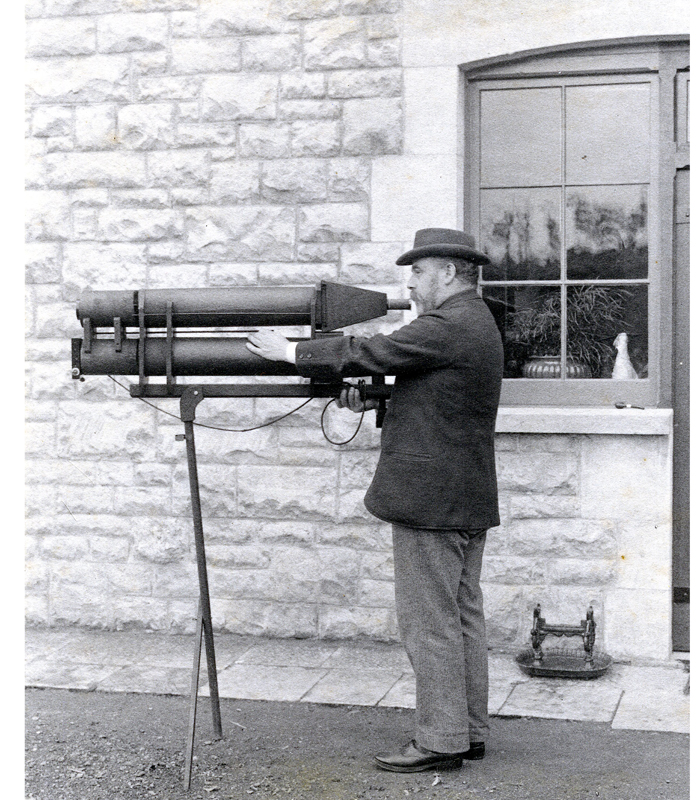
Professor Kester Rattenbury was shortlisted for her project “The Wessex Project: Thomas Hardy Architect.”

For more information on her project please visit here.

Wessex ‘through the camera’s eye’, Hermann Lea and Lea’s camera. ©Hermann Lea, Toucan Press

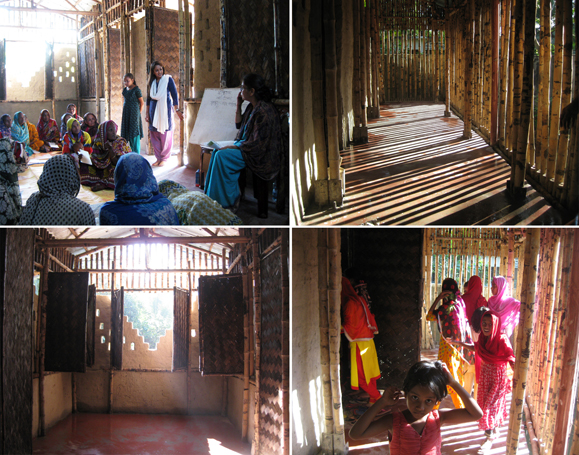
Tumpa Fellows was shortlisted for her project “Improvised architectural responses to the changing climate; making, sharing and communicating design processes.”

For more information on her project please visit here.

The Rajapur Community Building for Women’s Literacy and Healthcare – The Rajapur Centre completed and being used by the community. ©Tumpa Fellows

The winning papers and medallist will be announced at this year’s President’s Medals ceremony at the RIBA, in London, on the 3 December 2019.